


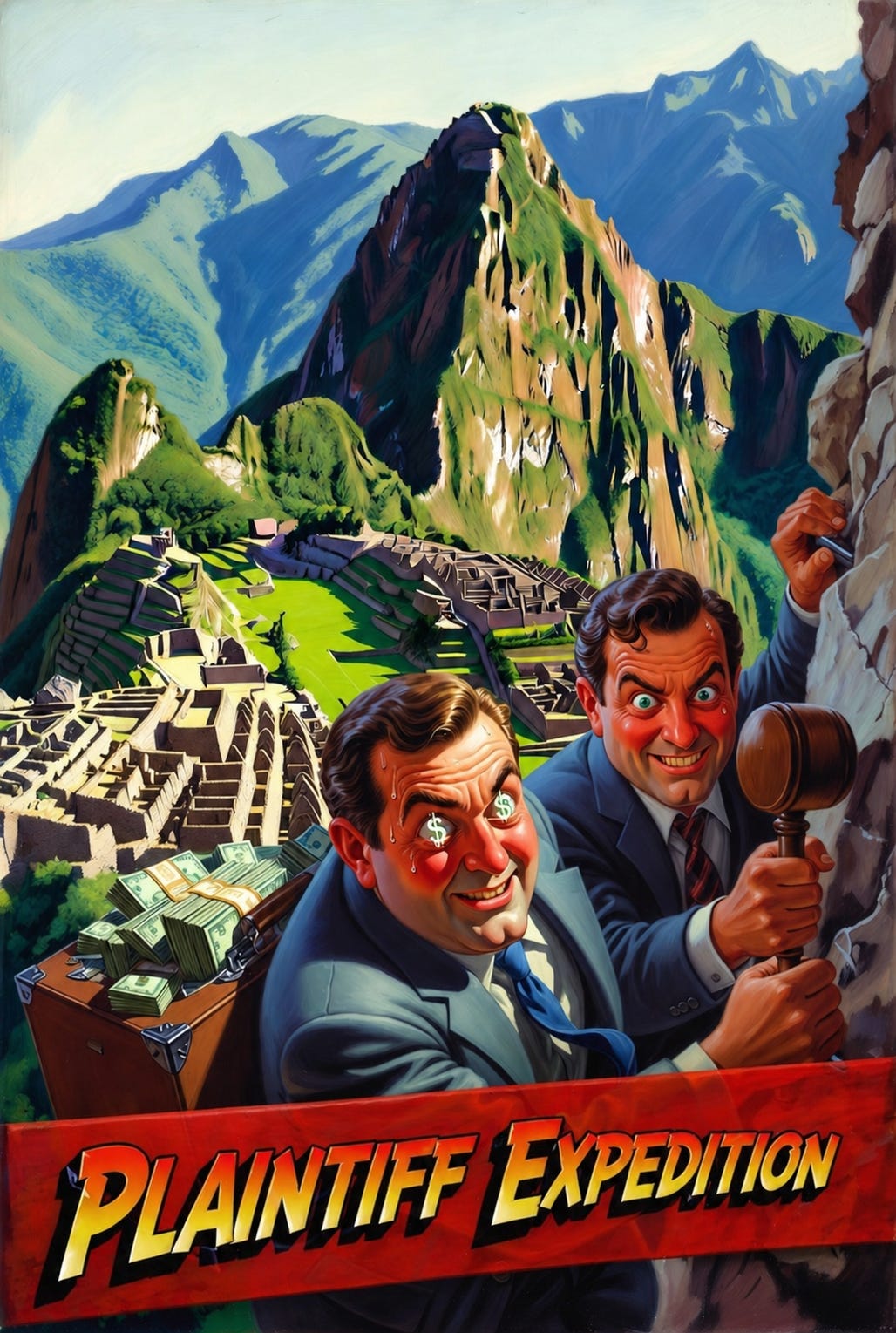
A Missouri jury is shortly to be asked to sit in judgment on the environmental standards that ought to apply to a smelter in the Peruvian Andes. The plaintiffs—more than 2,800 Peruvian citizens—are represented by American trial lawyers who recruited them in Peru. The defendant is not the Peruvian operating company that actually ran the facility, but its American parent, Doe Run Resources. Peru itself has twice protested to the United States that the proceedings infringe its sovereignty and breach the letter and spirit of the bilateral Trade Promotion Agreement.
The case is a textbook study in how well-intentioned environmental litigation can produce perverse outcomes. A clear-eyed risk-benefit analysis shows that Doe Run Peru’s stewardship of the La Oroya complex delivered measurable improvements in emissions, employment, and community conditions relative to the disastrous pre-1997 baseline—progress that the litigation now threatens to erase.
Critics contend the company’s record fell short in some areas, but the evidence indicates the story is more complicated: Doe Run Peru inherited a toxic legacy it did not create, invested far beyond its contractual obligations to clean it up, and kept the local economy alive while doing so. The litigation itself now does more harm than the emissions it seeks to punish.
Nationalized industry: “A vision from hell”
La Oroya sits at 12,300 feet in a narrow Andean valley. The metallurgical complex there began operations in 1922. For three-quarters of a century it was run first by a private American firm and then, after nationalization in 1974, by Centromin, a Peruvian state-owned enterprise. Emissions controls were minimal. Lead, arsenic, sulphur dioxide, and other metals poured into the air, water, and soil. By 1997, when the Peruvian government privatized the asset, the surrounding area was, in the words of one contemporary report, “a vision from hell.” The soil was contaminated; rivers ran with industrial waste; vegetation had largely disappeared.
Doe Run Peru, the new owner, inherited that legacy. Under the purchase agreement it accepted a detailed environmental remediation plan (known locally as a PAMA) that required roughly $110 million of spending over several years. The Peruvian government, for its part, retained responsibility for cleaning up historic soil contamination and agreed to indemnify the buyer against claims arising from pre-1997 operations. This division of labor was not generosity but commercial realism. No rational investor would have accepted open-ended liability for three generations of unregulated pollution by the state itself.
Private cleanup begins
What happened next is instructive. Doe Run Peru spent more than $300 million—nearly three times the original estimate. It built a new industrial wastewater-treatment plant, replaced antiquated slag-transport systems that had dumped waste directly into the Mantaro River, installed modern arsenic-handling facilities, upgraded air-pollution controls (including electrostatic precipitators and baghouses), and constructed sulphuric-acid plants to capture sulphur dioxide and metals from the lead, zinc and copper circuits. Fugitive emissions were tackled with enclosures and dedicated filtration. A closed-circuit television system allowed real-time monitoring and rapid response.
These were not cosmetic gestures. Lead emissions from the main stack fell substantially—by roughly 68-74% according to company and operational data—and overall air and effluent quality improved markedly in monitored parameters. Effluent discharges that had routinely violated Peruvian standards were brought substantially into compliance with the PAMA requirements Doe Run was obligated to meet.
Crucially, the company kept the complex running while it upgraded it. That mattered because La Oroya’s economy revolved around the smelter; closing it would have been an immediate social disaster. Instead, Doe Run Peru employed thousands, raised wages, built schools and clinics, ran hygiene programs for children, renovated homes to reduce lead-dust exposure, and funded nutrition and health initiatives.
Blood-lead levels among workers and residents, while still elevated by rich-country standards, fell markedly during its stewardship from the extreme pre- and early-privatization highs. The improvements were real, measurable, and achieved in one of the harshest industrial environments on earth.
Pragmatic investment vs punitive nostalgia
The risk-benefit ledger therefore favors Doe Run Peru’s approach. The pre-1997 baseline was decades of uncontrolled emissions under mixed private and state ownership. Doe Run Peru accepted a polluted asset, invested heavily in abatement technologies that its predecessors had never bothered with, and delivered measurable reductions in exposure while sustaining employment. The alternative—leaving the complex in state hands or selling it to an operator with lower environmental standards—would almost certainly have left the community worse off. That is the logic that has guided successful clean-ups of legacy industrial sites from the Ruhr to Pittsburgh: pragmatic investment beats punitive nostalgia.
Yet the Peruvian government did not honor its side of the bargain. It failed to remediate the historic soil contamination for which it had explicitly accepted responsibility. When the global financial crisis struck in 2008-09, it refused a modest extension to finish the final PAMA project. Doe Run Peru was forced into involuntary bankruptcy. The complex has been largely idle ever since. Thousands of direct and indirect jobs evaporated. No new operator has stepped in while the threat of American litigation hangs over the asset. The people now suffering most are the very residents the plaintiffs purport to represent.
Litigation compounds the injury
Two groups of American lawyers traveled to Peru to solicit clients. They enlisted a nun and a priest as “next friends” to lend moral authority in a devout community. The Peruvian entity that actually operated the smelter was not sued, only the Missouri parent and its executives. This is a deliberate attempt to keep the case in an American courtroom where damages can be larger and procedural hurdles lower.
Peru has objected formally, arguing that a Missouri jury has no business setting emissions standards for a Peruvian smelter or second-guessing the regulatory choices of a sovereign government. The US-Peru Trade Promotion Agreement expressly bars America from undertaking environmental law-enforcement activities in Peru. Allowing tort damages to function as de-facto fines for breaches of local standards comes uncomfortably close to doing exactly that.
Imagine the absurdity if the sovereign jurisdictions were reversed. Would the United States ever tolerate a foreign court ordering which regulations apply to a Missouri factory?
Evidence from whistleblower testimony and internal documents supplied by Doe Run describes forged official stamps, fabricated records, bribes to officials and coercive recruitment tactics—promises of dietary supplements withdrawn if families refused to sign. Critics of the company may downplay these issues, but the allegations cannot be waved away; they must be tested in court, and they raise serious questions about the integrity of the plaintiff recruitment process. Nor can the fact that the plaintiffs’ own experts have undermined the central jurisdictional theory: that St Louis executives “controlled” day-to-day operations at a complex 4,000 miles away. Real-time metallurgical decisions in the Andes are not made by video conference from Missouri.
The broader stakes are larger still. Foreign direct investment in extractive industries in developing countries is already politically fraught. Investors weigh political risk, commodity-price volatility and regulatory uncertainty. If American courts can retroactively impose their own environmental norms on projects that were openly negotiated with host governments, the calculus changes. Companies will either demand iron-clad indemnities (which Peru has shown it will not honor) or simply stay away.
The losers will be the very communities that need the capital, technology and managerial know-how to improve their environments. La Oroya’s experience is a cautionary tale: the only party that ever spent serious money cleaning up the site is now bankrupt; the complex it modernized is idle; the government that promised remediation has done nothing.
None of this is to deny that lead, arsenic and sulphur dioxide are serious hazards. Heavy-metal exposure carries well-documented health risks, particularly for children. Public policy must manage those risks. But risk management is not risk elimination at any cost. It requires weighing costs and benefits in context. In La Oroya the context was a legacy of 75 years of neglect by the state and prior owners, a high-altitude industrial valley with few other economic options, and a host government that both invited foreign capital and then failed to meet its own obligations. Against that backdrop, Doe Run Peru’s record—substantial emission cuts, sustained employment, community investment—represents genuine progress that no amount of litigation can replace.
Conclusion
A Missouri jury cannot usefully decide what the “correct” emissions standard for a Peruvian smelter should have been two decades ago. Nor can it fairly apportion blame when the host government has walked away from its contractual duties. The claims belong in Peru, where the facts can be examined by judges familiar with local conditions, the regulatory history, and the trade-offs inherent in any industrial operation.