


French translation
Here’s a fun question in the spirit of the season: in what world can a government fund an NGO, instruct that NGO to lobby the government’s own legislature, count the resulting pressure campaign as “the voice of civil society,” and then cite that voice as the democratic mandate for its policies?
Only in Brussels. And they got caught.
Rewind to January 2025. EU Budget Commissioner Piotr Serafin stood before the European Parliament and admitted — in the carefully sanded language of a man reading from legal review — that it was “inappropriate” for Commission services to sign agreements obliging NGOs to lobby MEPs specifically. The money flowed through LIFE, the EU’s €5.4 billion environmental slush fund. German MEP Monika Hohlmeier had pulled roughly 30 funding contracts from 2022–23 and found that grantees were expected to organize mass protests, run mass mailings, and squeeze lawmakers on the eve of key votes. Some were deployed to lobby against the Commission’s own trade agenda — DG ENVI using taxpayer-funded greens as a proxy army against Mercosur while President von der Leyen championed the deal down the hall.
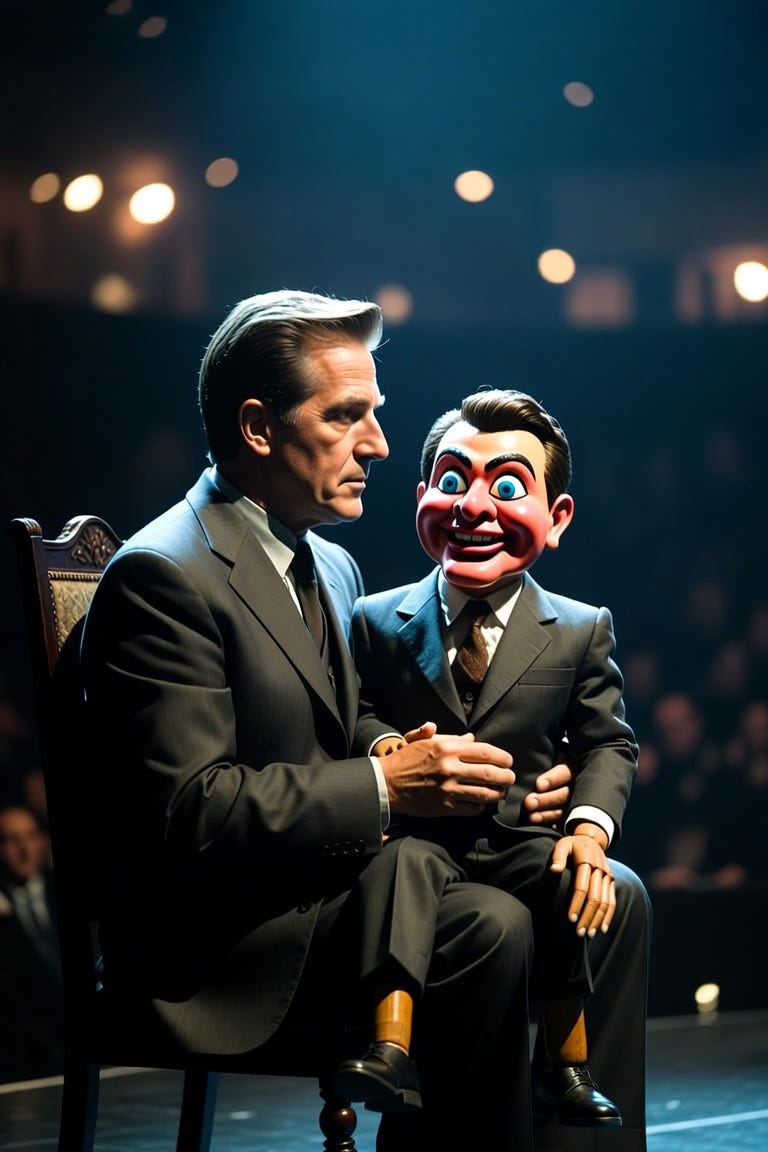
Call it what it is: ventriloquism. The Commission threw its voice through a felt puppet labeled “independent civil society” and then applauded the puppet’s testimony.
The cleanup was a masterclass in Brussels damage control. The European Court of Auditors probed and found EU funding of NGOs “too opaque” — €7.4 billion sloshed to NGOs from 2021–23 with no reliable central tracking, 30 organizations hoovering up 40 percent of a decade’s funds, a state-controlled institute misclassified as an “NGO” with a board stacked entirely with government officials. The auditors’ remedy? The Commission graciously agreed to some reforms — scheduled for 2028 and 2029. A parliamentary censure motion failed by one vote. The EEB, which takes a tenth of its budget from LIFE, declared the whole affair a “scandal that wasn’t.” The beneficiaries of the funding pronounced the funding clean. Case closed.
But keep your eye on what the puppet was actually selling, because the invoice just arrived, and it arrived at 44°C.
This month, as the third heatwave since May cooked the continent, France’s EDF took reactors at Golfech, Bugey, and Chooz fully offline, roughly 3.65 GW, about 6 percent of the country’s nuclear fleet, with several more running at reduced output elsewhere in the fleet. Earlier in the same heatwave, curtailments across a wider set of eight reactors had reached 6.4 GW at one point, about 14 percent of French demand.
Not because the reactors couldn’t run. EDF says plainly there’s no safety issue. They were shut down by environmental discharge limits: the thermal-pollution rules governing how warm the cooling water returned to the Rhône and Garonne may be. The rules the green lobby spent decades perfecting. Paris had to issue an emergency exemption for Bugey “to ensure the security of the power grid,” which is a government’s way of admitting its environmental law and its electricity supply have become mutually exclusive.
And the rest of the grid Europe built to green-lobby specifications? Germany suffered a heat-driven blackout. The UK activated a supply alert and paid up to £1,379 per megawatt-hour — a ransom, not a price — to keep the lights on. Italian analysts project Q3 power prices up 36 percent year-over-year. Tens of thousands of French homes lost power while roughly 20 percent of European homes have air conditioning, versus 90 percent in America, because for thirty years the same subsidized chorus told Europeans that cooling was decadence and baseload was sin.
And right on cue, the heat has a courtroom application. Strasbourg is sitting on Müllner v. Austria — the ECtHR’s designated follow-up to the Swiss KlimaSeniorinnen case, granted rare priority status, in which an Austrian MS patient argues the summer temperatures aggravating his condition are a human-rights violation by his government. Expect the sympathetic profiles to multiply with every degree on the thermometer. What those profiles will leave out is the org chart.
Start pulling the thread. The plaintiff’s lawyer, Michaela Krömer, runs the case arm-in-arm with Fridays for Future (Greta Thunberg’s youth movement) whose Austrian arm hosts the case on its own website, crowdfunded the filing, and markets it under the #FightForYourHumanRight banner.
The “third party interveners” who filed with the court include GLAN, the strategic-litigation shop that took $175,000 from George Soros’s Open Society Foundations in 2022–23, and CAN Europe, the flagship of the European Climate Foundation flotilla — the Hewlett-, Bloomberg-, and Rockefeller-fed funding hub we’ve already mapped in these pages. FFF’s case site solemnly assures readers that such interventions “do not take sides.” CAN Europe’s own website says it intervened to support the plaintiff’s claims. Pick one.
And the punchline: CAN Europe heads a thirteen-NGO consortium running an EU LIFE project — yes, that LIFE — whose stated objectives include “supporting and dialoguing with decision-makers” on EU climate targets. So Brussels is funding the coalition backing a lawsuit designed to force deeper emissions cuts on an EU member state, through the very program whose grants the Commission’s own budget chief admitted “inappropriately” obliged NGOs to lobby lawmakers. American billionaire foundations supply one hand; the European taxpayer supplies the other; both hands work the same puppet.
So run the loop one more time. Brussels paid the greens. The greens lobbied Brussels. Brussels enacted the greens’ agenda and called it the people’s will. The agenda produced a grid that fails precisely when Europeans need it most — and rules that switch off carbon-free nuclear power in a heat emergency. And when the heat arrives, the same network sues the government for the heat — with Brussels helping fund the plaintiffs’ cheering section. Now the same chorus explains that the fix is to do everything faster.
They’ll tell you the auditors found no wrongdoing. Sure — the rules allowed it. That’s the scandal. It was never about the environment. It was about controlling the narrative, and billing you twice: once for the lobbying, once for the electricity.
What could possibly go wrong? Open a window. It’s 44 degrees out.