


See the French and Hungarian translations.
The US litigation industry is constantly trying to find the next Big Tobacco. As the number of tort law firms grow, with the increasing costs of multi-district mass tort litigations, the amount of debt multiplying via the litigation finance loan sharks, law firms have become desperate to find the next big carcinogen or extend the longevity of existing caseloads. Central to this search is their scientific community of litigation consultants involved with the International Agency for Research in Cancer (IARC) and the Collegium Ramazzini.
IARC has been prone to publish monographs that “coincidentally” have an important influence on the evidence needed for big ticket lawsuits. The best known case is the IARC glyphosate monograph, that had litigation industry fingerprints all over it before the agency’s scientific panel of experts had even met to determine the herbicide’s carcinogenicity. IARC has also been used to produce further evidence to expand the number of ongoing lawsuits like benzene (where litigation consultants forced IARC to go back and perform an extra week-long monograph expert panel meeting to manufacture a link between benzene and non-Hodgkin lymphoma). Such is the case with the third, and most recent monograph on talc where IARC was seen to be working on behalf of the litigation industry.
I recently produced a three-part SlimeGate exposé of IARC’s scientific malfeasance in its third talc monograph. It asked the question of how IARC could produce three monographs with different carcinogenicity classifications in a world where the scientific evidence had not changed. The conclusion was that the litigation industry, via a group of scientists working for them as litigation consultants, had pushed to change the guidance for how IARC determined carcinogenicity, and this created the conditions for an expansion of talc lawsuits (as well as many other substances previously lacking sufficient evidence for lawsuits). What follows is an abbreviated version of how the litigation industry corrupted IARC for the purpose of winning tens of thousands of lawsuits (and how IARC complied).
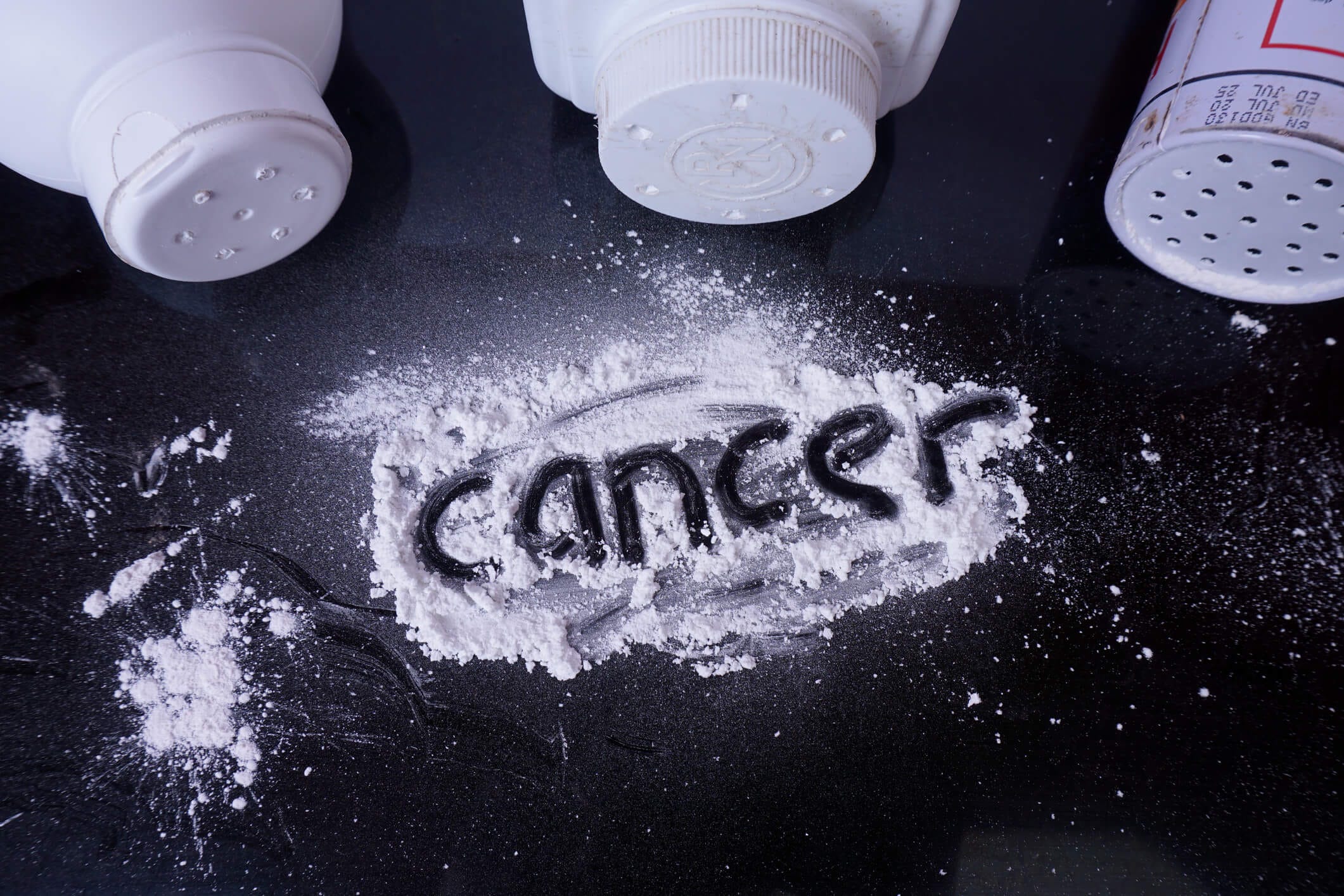
The Three Talc Monographs
Talc is a naturally occurring mineral known for its smoothness and softness. Most will know talc in its fine powder form as talcum powder, but it has a very wide number of uses, including many cosmetics and personal care products, in pharmaceuticals as fillers, carriers and lubricants, in food as anti-caking and polishing agents and many industrial uses from ceramics to paints, plastics and paper. Talc is also used in school products like chalk, sculpture materials and crayons.
Talc and asbestos are both silicate minerals often found in the same geological deposits, suggesting a risk of cross-contamination during mining. Industries have assured consumers that their talc has been asbestos-free since the 1970s but recent Predatort lawsuits have tried to cast doubt on that assertion. The first IARC monograph on talc in 1987 looked at the occupational hazards of talc with and without asbestiform fibers, concluding that only talc with asbestos was carcinogenic (Group 1).
The second IARC talc monograph in 2010 again looked at talc with and without asbestiform fibers, but focused on the use of talcum powder from the perspective of inhalation versus perineal applications. They found there was limited evidence for carcinogenicity (Group 2B) for the perineal use of talc-based body powder.
It is important to note that in 2010 there were already a number of lawsuits against talc mining companies and personal care companies like J&J. But the successful cases against J&J linked mesothelioma cancers to the talcum powder with potential asbestos contamination. There were thousands of other plaintiffs with cancers that did not fit the asbestos link. If only there could be some evidence linking these cancers to talc.
The third IARC talc monograph in 2025 only examined talc without asbestiform fibers, and unlike the previous two monographs, “succeeded” in classifying this uncontaminated form of talc as Group 2A – probably carcinogenic to humans. (A Group 2A classification was the minimum needed for legal wordsmiths to convince a jury of a link between talc exposure and cancer, allowing Predatorts to increase their plaintiff pool with a wider range of cancers.)
Irregularities with IARC’s Third Talc Monograph
One could assume that the differences in the outcomes of these three talc monographs were due to better research and more data to prove a link to certain cancers. But there were no new studies that threw overwhelming evidence to move talc from a Group 3 classification (inadequate evidence of carcinogenicity) in 1987 to Group 2B (possibly carcinogenic) in 2010 and finally, in 2025, Group 2A (probably carcinogenic). Rather, there were a series of irregularities that suggest the third talc monograph was produced with ulterior motives.
The 2025 IARC talc working group relied heavily on the 1993 NTP animal study, claiming it provided sufficient evidence of carcinogenicity. The problem here is that the 2010 IARC talc monograph considered this very same study to be inadequate and lacking relevance.
The 2019 IARC Advisory Committee considered talc as a priority substance for the upcoming monograph meetings. Among thousands of potential substances that had not yet been considered by the monograph program, and given there were no significant studies since the last talc monograph, was there really any justification for bumping talc again up the priority list?
IARC rushed the publication of the talc part of the IARC expert meetings to June, 2025 instead of waiting and publishing the full monograph together in September of that year, together with the chapter on acrylonitrile. There was no reason to break with standard publication protocol and publish a partial document only to republish it in full three months later.
Importantly, there was significant dissent against the conclusions of IARC’s 2025 talc classification. While IARC never publishes dissenting views (considering them as abstentions) and pretends their monographs represent a scientific consensus, the dissenting talc working group experts did not stay silent (see below). Taking their views into account, the 2025 IARC talc monograph should have classified talc, at best, as Group 2B, possibly carcinogenic.
The only rational justification for these actions is to look at IARC’s decisions through the “litigation lens”. In 2019, when the IARC Advisory Committee bumped talc up the priority list, law firms were amassing tens of thousands of lawsuits against J&J on talc, but with only a few of them relying on the mesothelioma asbestos link.
The 2019 IARC Preamble revision also made it almost certain that talc without asbestos contamination would be classified as probably carcinogenic (see below). Rushing the publication of the talc part of the full monograph before the final report was complete would only make sense if you consider the high number of talc lawsuits in front of juries at the time.
But perhaps the most damning indictment of IARC’s indentured servitude to the US litigation industry is how a group made up mostly of scientists working as litigation consultants to US tort law firms worked to revise the IARC Preamble, the guidance document for how IARC classifies carcinogenicity. They basically ensured that IARC monographs would be “litigation-ready”.
IARC Moved the Goalposts
In 2016, a group of scientists closely linked to IARC or the Collegium Ramazzini published a paper linking cancers to Ten Key Characteristics. By 2019, this strategic approach was adopted into the revision of the IARC Preamble (the guidance document for monograph classifications). See the Firebreak’s analysis of IARC’s Key Characteristics strategy.
The “key characteristics” concept claims that cancers share many of the same characteristics. If a substance, for example, is genotoxic, alters DNA, induces oxidative stress or chronic inflammation … then there is a higher likelihood it is a carcinogen. The logic is that the more of these characteristics a substance shares, the more carcinogenic it is. If benzene, for example, shares seven of the ten key characteristics, there is strong confidence that it is carcinogenic. Note that IARC merely conducts hazard assessments, so a finding like “glyphosate is genotoxic” does not consider at what dose or level of exposure such a hazard might become an actual risk.
The problem with this checklist approach is that any substance can fall under a certain number of these characteristics and still not be carcinogenic. A paper published by Becker et al found the 10 Key Characteristics to be so open as to not be able to discriminate between a carcinogen and a non-carcinogen. Becker tested the Ten Key Characteristics against 248 substances (of which 54 were carcinogens) and found the IARC checklist could not distinguish the non-carcinogens.
Once the goalposts had been moved with the Preamble revision, IARC could go back and reassess a number of substances that had not delivered litigation-friendly classifications (like talc). But not every scientist on the IARC working group panels appreciated the lawsuit expediency of such strategies. Not every scientist on IARC expert panels worked for the US litigation industry.
The EPA’s Andrew J. Ghio was a member of the third IARC talc monograph panel and wrote a letter to the editor to the American Journal of Respiratory and Critical Care Medicine in February, 2025. He noted that the different classifications between the 2010 and 2025 IARC talc monographs were not made on the basis of any new research or evidence, but because IARC had updated their Preamble – the rules for determining the carcinogenicity of a substance.
As a member of this working group, I suggest that this conclusion conflicts, in part, with a previous IARC classification that provided that inhaled talc not containing asbestos or asbestiform fibers was a group 3 carcinogen (“not classifiable”), while perineal use of talc-based body powder was a group 2B carcinogen (“possibly carcinogenic”) (2). These evaluations were conducted by two working groups that included some of the same experts who reviewed much of the same data (1, 2). The dissimilar conclusions of the two groups may reflect the impact of an amended IARC monograph preamble, delivered between the two classifications, that was intended to provide a stronger and more transparent method for the identification of carcinogenic hazards (3).
For this reason, Ghio and other working group members dissented. But IARC did not address their concerns in the monograph report.
IARC in Service to the US Litigation Industry
At least ten of the 19 scientists involved in the IARC 2012 workshop to establish the Ten Key Characteristics have worked as litigation consultants, including the lead author and main architect of this checklist strategy, Martyn T Smith. They knew the value a simple checklist would have in convincing a jury of a link between a substance and a cancer.
The Key Characteristics approach is not scientific, avoids having to deal with epidemiology, or even the difficult rodent evidence of carcinogenicity, and turns the science into an automated process. There is no scientific justification for the Ten Key Characteristics of Carcinogenicity to have ever made its way into the IARC guidance document for cancer classification.
IARC monograph program managers, namely the head, Kurt Straif, and the later acting head, Kathryn Guyton, were complicit from the start in the conception and integration of this key characteristics strategy. SlimeGate has reported how these two scientists were very active in pushing the IARC glyphosate monograph into the political / policy realm and how they used dirty tactics against other scientific agencies that disagreed with their conclusions.
Many of these scientists are also Collegium Ramazzini fellows, a type of closed-membership club of activist scientists closely intertwined with IARC. Several of the scientists have been involved in developing the concept of adversarial regulation. The logic, following the La Jolla Tobacconization Playbook, is that regulation does not work at curbing the power and pollution of industry, so it is better for scientists to work with Predatort law firms and sue the hell out of industry until they submit (or, better, go bankrupt). It worked to bring Big Tobacco to its knees and is now being applied against the fossil fuel, pesticide, chemical, plastic and food industries. And with the IARC / Ramazzini network, it has also made a certain select group of scientists very wealthy.
A logical argument would be to simply retract the IARC monographs that have been shown to be corrupted. Every national risk assessment agency that has looked at IARC’s evidence on glyphosate has rejected the conclusions and kept their regulations on the herbicide unchanged. That should be enough to retract IARC’s glyphosate monograph (let alone the corruption revealed by Reuters in IARC’s post-meeting document production). The dissenting views of the 2025 IARC talc monograph that went unattributed is sufficient reason to retract that document.
But retracting these monographs would imply that IARC monographs have a scientific value. It seems, more and more, that their only value is found in the courtrooms.