


Health Warning: Mercenaries at Work
Summary
Lighthouse Reports releases an investigation claiming the food industry is clogging courts with lawsuits to interfere with food safety measures.
81% of the cases are in Mexico, but Lighthouse tries to portray it as a global industry strategy to protect ultra-processed foods.
Most cases are against the imposition of indiscriminate Mexican sugar taxes on certain foods.
There was no actual Lighthouse investigation, but a series of articles built around a database.
The database was built by a group of NGOs and institutes all funded by Bloomberg Philanthropies.
Michael Bloomberg’s main (only) health policy strategy, since his failed New York regulation, is to ban or raise taxes on lifestyle pleasures like sugary sodas and processed foods.
What happens when you want to run a campaign, but you have very limited data and evidence? One strategy more increasingly used is to hire an activist NGO like Lighthouse Reports to fabricate an investigation they can funnel through their tried and tested noise machine. What happens if the budget has been cleared but there is no story? No problem. Lighthouse Reports has experienced spinmeisters capable of communicating insignificant research like it was a groundbreaking exposé. Just pay the Dutch NGO enough and they’ll deliver?
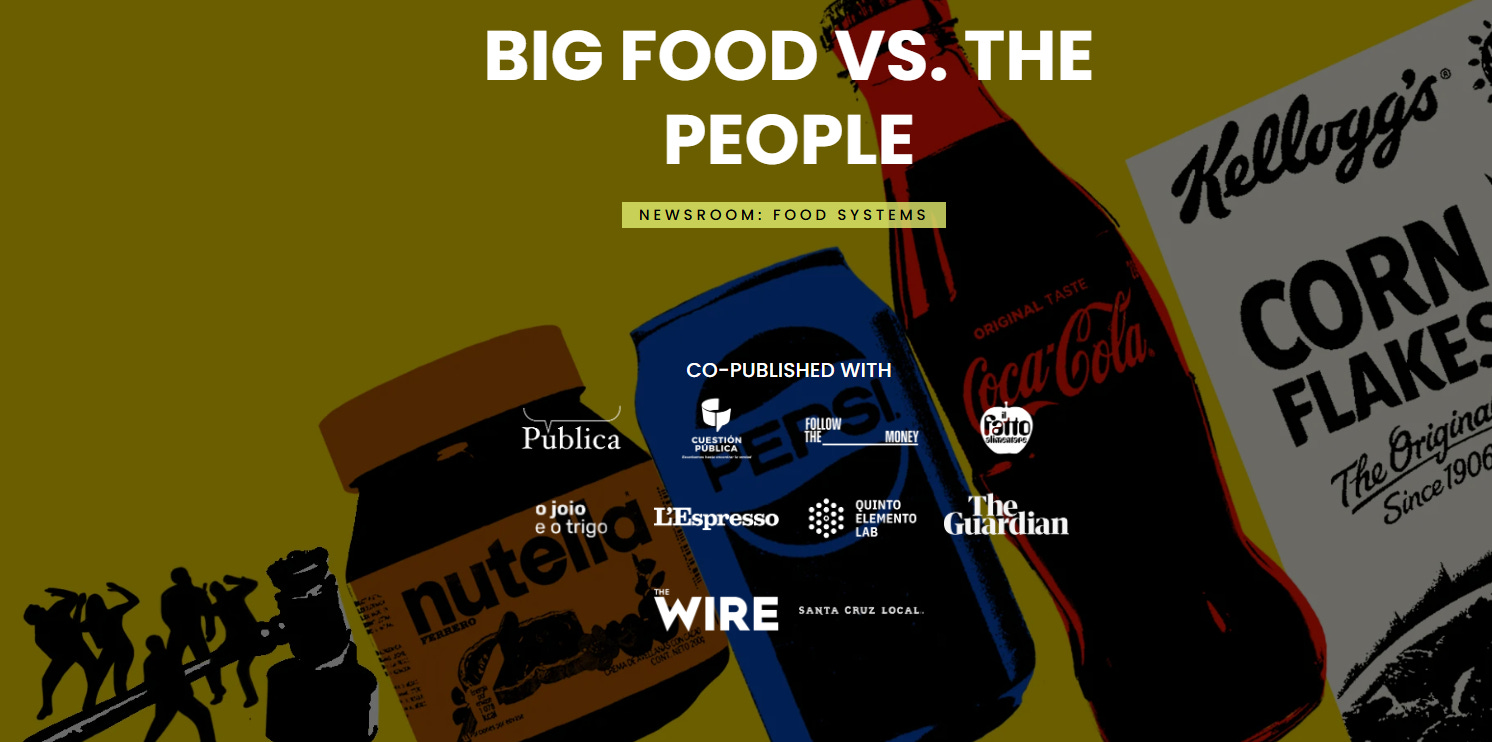
Yesterday, Lighthouse Reports released its latest investigation entitled Big Food vs. The People. The subtitle claims to “expose Big Food’s 239 lawsuits against life-saving policies”. There was no actual “report” but a web-page with a collection of clever graphics and links to connected articles from their ten freelance partners (all “copublished” in a coordinated fashion yesterday). What they based this communication campaign on is a dataset they claim to have built that breaks down the industry lawsuits.
A simple visit to the dataset, something most readers, editors and food science activists don’t bother to do, would show some curious things. The 239 industry lawsuits were gathered over 15 years and 193 (81%) were from Mexico where the government had imposed an indiscriminate series of food and drink taxes and bans. If the lawsuits in Colombia and Brazil were removed, then only 11 lawsuits (6 in the US, 4 in India and 1 in the UK) would be able to be considered ... over 15 years. Lighthouse Reports was trying to sell an ultra-processed nothing burger.

Why wasn’t the Lighthouse Reports investigation then entitled Big Food vs. The People in Mexico? This would allow analysts to address the peculiar situation where the Mexican government’s food and drink regulations had become unreasonable and unfairly punished some companies and products with high taxes on obscure categories like “non-essential foods”.
The Lighthouse Reports NGO is not interested in an open discussion on food law or the rights of food producers and manufacturers to participate in the Mexican economy. They were interested in producing a report that would delegitimize the food industry, portray a local situation as a global phenomenon and then blast it across their global network of activist reporters and angry anti-capitalist academics.
Capitalist exploitation, health decline, poverty, big business profits… those are the stories they wanted to sell. The fact that there wasn’t enough legitimate news to create the intended outrage didn’t matter. Lighthouse would just feed it through their tried and tested noise machine.
The Lighthouse Campaign Noise Machine
Lighthouse Reports’ strategy is very simple.
Get funding from a special interest group via a complex web of pass-throughs,
assemble a group of hungry, freelance reporters with clear anti-capitalist political biases,
produce a minimalist investigation,
ensure a large budget to produce effective graphics,
pay off your network of angry freelancers to coordinate a series of articles on the launch day,
try to amplify the noise and let the special interest groups then take over the campaign.
The last article looked at how the Lighthouse Reports Poison PR investigation was a mercenary assault on behalf of the US litigation industry trying to create outrage to time with the bellwether cases against Syngenta on paraquat. The actual evidence they had was very thin, and only enough to bankrupt a small communications consultancy, but the Lighthouse Reports activists, along with their network of angry freelance journalists did what they were paid to do.
But if the Lighthouse network of activists, academics and reporters are merely a group of activist journalists for hire, shouldn’t the NGO be transparent on who was funding them, for how much, and what other levels of cooperation and coordination was shared?
Follow the Money
The Lighthouse Reports Poison PR investigation was motivated by the interests in the US litigation industry and (officially) funded with an $800,000 grant from the Oak Foundation to try to handicap conventional farming and the crop protection industry. Who funded this latest campaign and how much did the activists receive? In the interest of journalistic integrity and transparency, Lighthouse Reports has again chosen to not provide those details, requiring more Firebreak forensic foundation research.
This is important because the Lighthouse Reports NGO has identified itself as a collaborative investigation organization. In other words, they are mercenaries producing reports for the special interest groups operating from the shadows. Once we establish the groups behind this latest publication, we can better understand the objective of Big Food vs. The People.
The main work and resources went into the creation of the dataset of lawsuits in the six countries. There was actually no investigative report published, just a series of articles and postable graphics built around the dataset. Lighthouse reports attributes the work on the dataset to the following NGOs and institutions.

What do these organizations all have in common (or rather, with whom)?
El Poder del Consumidor, a Mexican consumer association, is funded by Bloomberg Philanthropies and is a partner group of Michael Bloomberg’s regranting body, Vital Strategies.
The Global Center for Legal Innovation on Food Environments acknowledges their interests very clearly:

It doesn’t go unnoticed that the three main countries in the Lighthouse Reports research, Mexico, Brazil and Colombia, are also the key focus countries for the Global Center. The Global Center for Legal Innovation on Food Environments is situated in the O’Neill Institute for National and Global Health Law which is situated in the Georgetown University Law Center where the Bloomberg funding is passed through. As a project under an academic fiscal sponsor, The Center does not have to declare their funding or be held accountable.
The Global Health Advocacy Incubator (GHAI) is a Bloomberg Philanthropies regranting body, developed as an initiative of another well-known Bloomberg NGO, the Campaign for Tobacco-Free Kids. It is interesting to see how the Bloomberg flotilla of NGOs developed to fight tobacco and nicotine products are now exercising the same deceptive funding obfuscation on food policy campaigns.
ACT, the Brazilian health policy NGO based in São Paulo, is the last partner mentioned in the groups listed behind building the dataset. Once again, its main funders are Bloomberg Philanthropies, Vital Strategies and GHAI (the last two merely regranting the funds from the Bloomberg flagship).
This is a typical Bloomberg strategy of creating a large number of NGOs to pose as independent organizations while they are simply taking funds from Bloomberg Philanthropies and redistributing them among themselves. Outside of tobacco and nicotine control, Vital Strategies now has a food policy division that is working on implementing bans and higher food taxes. Is it just a coincidence that two of Vital Strategies’ main areas of operation on food policy are Colombia and Brazil? Their policy strategy is to increase taxes on “unhealthy” food and demand front of package labelling.
Michael Bloomberg’s Money, Michael Bloomberg’s Interests
Bloomberg Philanthropies has put aside $435 million to establish the Bloomberg Food Policy Program to wage war on ultra-processed, sugary food and drinks. Compared to Michael Bloomberg’s $2 billion for his war on nicotine, this may seem like small beer, but in any policy campaign arena, $435 million can buy a lot of influence. It can certainly buy a lot of journalists.
“Bloomberg Philanthropies is supporting the enactment and evaluation of policy that aim to move people toward healthier diets in cities and countries around the world. The program focuses its work in Brazil, the Caribbean (Jamaica & Barbados), Colombia, Mexico, South Africa, and the United States, all of which have high rates of obesity and are taking action.”
The key areas of initial operation for the Bloomberg Food Policy Program is, once again, Mexico, Brazil and Colombia and that should come as no surprise now that these areas were reflected in the Lighthouse Reports research. In essence, the various Bloomberg entities handed the research to the Dutch NGO as a finished product (along with the financial contribution … for the noise machine).
Like nicotine and tobacco control campaigns, Michael Bloomberg is stuck in a single-minded strategy on food policy: ban products and increase taxes. It doesn’t matter if it has never worked, creates dangerous black markets and leads to worse health consequences. His funding of this Lighthouse Reports investigation is meant to fight back against the mounting legal challenges from the food manufacturers and producers. A kind of “flanking” in lobbying terms. The poor man must still be struggling to accept one of his greatest failures as mayor of New York when he tried to tax and ban sugary drinks. Decades later, with billions wasted, Bloomberg is still unable to see the poverty of his policy strategy or what actual good his philanthropy could have done.
Within this food and soda tax strategy lie the motives to hire the Lighthouse Reports activists. Why couldn’t the Lighthouse Reports NGO, and the lead author, Thin Wei Win, admit that their campaign was funded by Bloomberg Philanthropies and that the objective was to feed into the Bloomberg strategy of increasing taxes on sugary food and drinks? Shouldn’t their network of journalists be transparent? Even the draft of the academic paper they hope to publish has no acknowledgement of Bloomberg funding or declaration of conflicts of interest. Without a proper academic structure, it is no wonder the draft remains unpublished.
This is paid-off activism, not journalism or research. Lighthouse Reports think the rules don’t apply to them so long as they win (and continue to gain further funding). There are also no demands for ethical conduct or transparency demanded on foundations like Bloomberg Philanthropies. They have created an excellent breeding ground for activist mercenaries like Lighthouse Reports to thrive. For the rest of us, yesterday was merely another day of well-amplified misinformation - more noise and nonsense.
An Afterthought
These mercenary activist media strategies are effective in spreading political campaigns but outside of their ethical repugnance, they are getting quite boring. One thing I did not understand with this latest special interest campaign is why Michael Bloomberg’s hired media gun, The Examination, didn’t pile onto the noise machine assault and amplify this investigation. Michael created and funded this “collaborative” news enterprise in part to attack the food industry. Perhaps there’s a turf war going on with the consultants running Bloomberg’s “in-house” media group, The Examination, having issues with the questionable techniques used by the Dutch activists. … Pass the popcorn.