


This is Part 4 of the Firebreak’s Big Change series. It is a case study of how philanthropists working with NGOs, a United Nations organization and the media can control global health policy.
Summary
Michael Bloomberg has invested $1.6 billion (with commitments for a further $400 million) into global tobacco and nicotine control programs.
He has created a complex web of at least 15 NGOs that interact with and interfund each other, while trying to disguise their intertwined relationships around Michael Bloomberg
These 15 NGOs are coordinating to implement a WHO program. This program has no funding outside of Michael Bloomberg, making this UN organization compliant to the billionaire’s views and initiatives.
This dependence has compelled the WHO to attack tobacco harm reduction strategies like vaping and nicotine pouches, pressuring its members and bodies like the European Commission to fall in line with Michael Bloomberg’s rhetoric, despite the lack of scientific evidence.
This is a case study of how Big Change philanthro-capitalism can control a global health policy agenda and a UN agency program.
How to Waste $2 Billion
What would you do with $2 billion? If you want to spend it on dominating a global policy issue, you should take a lesson from Michael Bloomberg.
With his latest $400 million round of commitments, an even $2 billion is how much Bloomberg’s two main foundations have spent to single-handedly direct the global tobacco and nicotine control campaign, shaping it to fit his puritan, prohibitionist strategy. This is a case study in how the Big Change movement can be controlled by one wealthy billionaire with ambition and a complex network of organizations.
Calling Michael Bloomberg a “philanthropist” would be a mistake. A philanthropist is someone who donates to organizations with the intention of supporting vulnerable populations, easing suffering and improving the world. He is more of a “philindustrialist”, directing his funding to make an impact that forwards his political objectives, personal ambitions and need for self-aggrandizement.
More often than not, Bloomberg creates organizations that he actively controls via fiscal sponsors. Many of these projects are not legal entities, but merely front groups for the campaigns that advance Bloomberg’s global status. The Firebreak has looked at several of his creations like a media implant called The Examination that writes reports on health campaigns his other projects are campaigning on. He has invested more than $100 million into fiscal sponsors and universities to run campaign projects like Beyond Coal, Beyond Petroleum and Beyond Plastics.
How the money is spent is neatly hidden behind a web of intermediary organizations with little to no transparency, accountability or fiscal controls. These organizations only exist so long as Michael continues to write the checks, and so long as they continue to promote Bloomberg’s image and his interests. What is fascinating is the complexity of Bloomberg’s philanthropic endeavors. He does not donate to an organization or a campaign, he creates or takes over organizations he then integrates into a web of activism and policy domination.
The best example of this is how Michael Bloomberg created a complex web of organizations to essentially take over the World Health Organization (WHO) program on tobacco control, and now uses it to advance his strategy and ambition at the global level to remove tobacco harm reduction strategies like vaping and nicotine pouches.
Strategic Control Within the Bloomberg NGO Flotilla
In an earlier article, parts of Bloomberg’s flotilla of tobacco control NGOs was mapped out, how they coordinated with each other and redistributed funding from Bloomberg Philanthropies and Bloomberg Family Foundation. For example, Michael Bloomberg’s tobacco control funding is usually first channeled through the Bloomberg Initiative to Reduce Tobacco Use Grants Program, which is jointly managed and run by The International Union Against Tuberculosis and Lung Disease (The Union), Vital Strategies and the Campaign for Tobacco-Free Kids (all Bloomberg-funded or created groups). They then, in turn, fund groups and programs like Global Health Advocacy Incubator (GHAI) – an initiative of Bloomberg’s Campaign for Tobacco-Free Kids. GHAI then makes grants to different organisations like the Coalición América Latina Saludable. Each of these groups is beholden to the views and whims of Michael Bloomberg.
Each NGO also takes a slice or commission of the funding as a pass-through and this keeps them engaged, enriched and duly compliant. This commingling and coopting of NGOs also distorts the true depth of control the philanthropy exerted on these organizations. Only a few people would catch or care that these NGOs are all funded by the same activist philanthropist or are all ordered to dance to Michael’s music. This includes the WHO.
It is curious why Bloomberg has spent so much time trying to deflect his involvement in his activist campaigns. The Firebreak has explained how this technique of hiding behind fiscal sponsors or universities frees his funds from being subject to rules of transparency, accountability or liability. So when Michael Bloomberg speaks out against alternative nicotine products like vapes and nicotine pouches, rejecting them as credible tobacco harm reduction strategies, a large number of seemingly independent organizations promote and implement his strategy. This includes the WHO.
While Bloomberg’s puritan view against tobacco harm reduction is controversial and lacking in scientific support, his flotilla has had no choice but to fall in line, supporting his views and translating them into campaigns. And, again, this includes the WHO.
Bloomberg’s Strategic Control of the WHO
A Firebreak exposé showed how 15 of the 29 NGOs allowed to attend the WHO’s Framework Convention on Tobacco Control (FCTC) COP11 last December were Bloomberg organizations (including a project that does not even exist as a legal entity).
Bloomberg’s tobacco control NGOs work in coordination to create an image of policy consensus and multi-pronged attack strategies on threats to their political goals. They present themselves as multiple organizations with different interests, but as they are all feeding from the same funding trough, their strategic consensus is one borne out of necessity. As they are so intertwined, it would be suicide for any organization to dare speak out in favor of vaping and nicotine pouches as two effective means to reduce cigarette consumption and harm.
To say there is consensus against tobacco harm reduction products simply means that one billionaire believes it to be so. But shouldn’t someone in the World Health Organization look at how these alternative nicotine products have succeeded in reducing smoking rates in countries like Sweden and New Zealand? Especially when they make these claims very loudly at international conferences? That would be basic common sense, except that these Bloomberg-funded organizations all exist, essentially, to run different parts of the WHO tobacco and nicotine control strategy via a Bloomberg-funded program called: “MPOWER”.
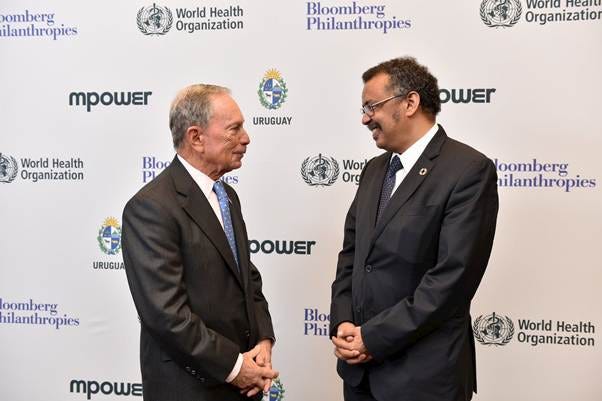
What is MPOWER?
MPOWER is the WHO technical initiative providing a series of measures designed to help countries implement the WHO Framework Convention on Tobacco Control (FCTC).
It is an acronym that includes six measures to implement tobacco and nicotine control: Monitor, Protect, Offer help, Warn, Enforce bans, Raise taxes.
The WHO claims ownership of the program and provides the framework, but the funding for implementation comes from external donors, the largest of which is Bloomberg Philanthropies.
a) What is the WHO’s role in MPOWER?
The reality is that the WHO does not directly fund MPOWER implementation. They have no budget outside of being able to produce a webpage with three lines of text. The African WHO MPOWER report says a bit more, claiming they provide: “technical guidance, global monitoring and policy frameworks”, but what does that mean?
The Framework Convention on Tobacco Control (FCTC) aims to reduce tobacco and nicotine use at the member state level, meaning FCTC signatories set targets via the MPOWER initiative. But the WHO does not finance country‑level implementation, nor do they get involved.
To implement the FCTC/MPOWER targets, member states rely on: government budgets, philanthropic funding and NGO‑managed grants. It is important to understand that most lower and middle income countries can’t afford large budget allocations to such programs, so they depend on philanthropies and NGOs to comply with the WHO targets. Enter Michael Bloomberg.
b) What is Bloomberg Philanthropies’ role in MPOWER?
Bloomberg Philanthropies is the primary global funder of MPOWER implementation, via the Bloomberg Initiative to Reduce Tobacco Use, which explicitly supports countries in adopting MPOWER policies. They claim that more than 100 countries now have at least one MPOWER policy in place due to this funding and they are expanding the initiative with Michael Bloomberg committing an additional $420 million to expand MPOWER implementation over the 2023–2027 period.
Does MPOWER actually exist as a real WHO programme or is it an externally run sub-contract. UN agencies like the WHO have very little budget and with recent funding cuts from (former) member states like the US and EU countries, they have been forced to rely more on philanthropists and their global NGOs to design and run their programs. This can have a serious negative influence on global policies. A few other cases:
Why, for example, is the UN’s Food and Agriculture Organization spending so much time promoting a backward peasant farming ideology like agroecology? Well, the Agroecology Fund has 100 million reasons for that.
There can also be an effect on the long-term survival of such global programs. Like MPOWER, the UN Environmental Program played a symbolic role in the Net-Zero Asset Management Initiative or the Net-Zero Banking Alliance, marginally managing the program. It quickly fell apart when all of the funders and activist leaders left for “greener” pastures.
How beholden is MPOWER to Michael Bloomberg, and would it meet a similar fate should the emperor lose interest (or run out of funding)?
To understand this, we need to recall how Bloomberg does not fund a philanthropy, he manages a complex web of organizations directed to deliver his strategy.
c) How does Bloomberg money fund MPOWER?
Bloomberg funds MPOWER implementation via his flotilla of NGOs. It is important to realize that there is zero funding going directly to the WHO. Michael keeps tight control over what the WHO can say or do on tobacco control.
So how does Bloomberg fund his NGO flotilla to control and implement the WHO strategy? Here it gets curious.
Recall that MPOWER is an acronym for six services or strategies to implement tobacco control. Bloomberg NGOs are slicing up MPOWER implementation in a way that certain NGOs from his flotilla are responsible for different measures in the initiative which they, of course, then coordinate between themselves.
• Monitor tobacco and nicotine use via surveillance systems developed by the CDC Foundation (via a $360 million Bloomberg fund for tobacco control support)
• Protect individuals via smoke‑free laws implemented by the Campaign for Tobacco-Free Kids that runs programs for advocacy and legal support
• Offer help via cessation services provided by Vital Strategies’ cessation programs and media campaigns
• Warn on the risks of tobacco and nicotine products via Bloomberg’s STOP (Stop Tobacco Organizations and Products) watchdog
• Enforce advertising bans and other restrictions is managed by the Campaign for Tobacco-Free Kids which proudly identifies itself as the “enforcer NGO”.
• Raise taxes through the International Union Against Tuberculosis and Lung Disease’s tax modeling support
It would be impossible for the WHO to cut this Bloomberg Gordian knot and still have a program. Most of Bloomberg’s $2 billion that keeps his flotilla afloat is directed toward this interdependent MPOWER strategy, with a centralized control nerve center.
There is no WHO involvement here, because, well, Bloomberg funding is always about control. To be fair, it is his money and he can decide how to spend it … but then don’t pretend that MPOWER is a WHO program developed by a large number of separate NGOs coming together to provide a consensus view …. and don’t pretend that the WHO Global Ambassador accolade wasn’t anything more than cheap ribbon awarded by a broke international agency.
How MPOWER (ie, Michael Bloomberg) influences tobacco reduction strategies in developing countries?
As mentioned earlier, MPOWER implementation depends on funding from governments, philanthropies and NGOs. Most developed countries can afford to fund their own programs and their leaders are intelligent enough to recognize how harm reduction strategies using alternative nicotine products like vaping and nicotine pouches can dramatically reduce smoking and its health consequences. But many lower and middle-income countries cannot afford such programs and remain captive to Bloomberg-funded puritan dogma.
That being said, the Bloomberg MPOWER pixie dust also rubs off on wealthier nations. The European Commission awarded €3 million to a consultancy to produce a report to guide the upcoming revision of the EU Tobacco Products Directive, and several Bloomberg NGOs were directly involved. Given how the EU’s Health Directorate is committed to obeying the WHO’s diktats, much of the report’s advice had parroted the Bloomberg rhetoric against alternative nicotine products.
But Bloomberg NGOs are generally focusing their funding and activism in developing countries where they can make a bigger impact. They often award individual grants that can reach hundreds of thousands of dollars per project. As these cash-strapped governments often lack the budget or expertise to implement the MPOWER / FCTC strategies, the Bloomberg groups often manage the show in regions where that kind of money speaks loudly.
The WHO is merely a shadow behind the curtain in these developing countries while a global health program has been effectively outsourced to a billionaire with a messianic complex.
And Michael Bloomberg does enjoy the limelight on the global stage. In helping lower and middle income countries reach MPOWER targets, Bloomberg Philanthropies then gives out awards to countries that achieve certain goals. At last year’s celebration gala, government ministers from India, Mauritius, Mexico, Montenegro, the Philippines, and Ukraine were able to pose for photos with Michael at the World Conference on Tobacco Control.
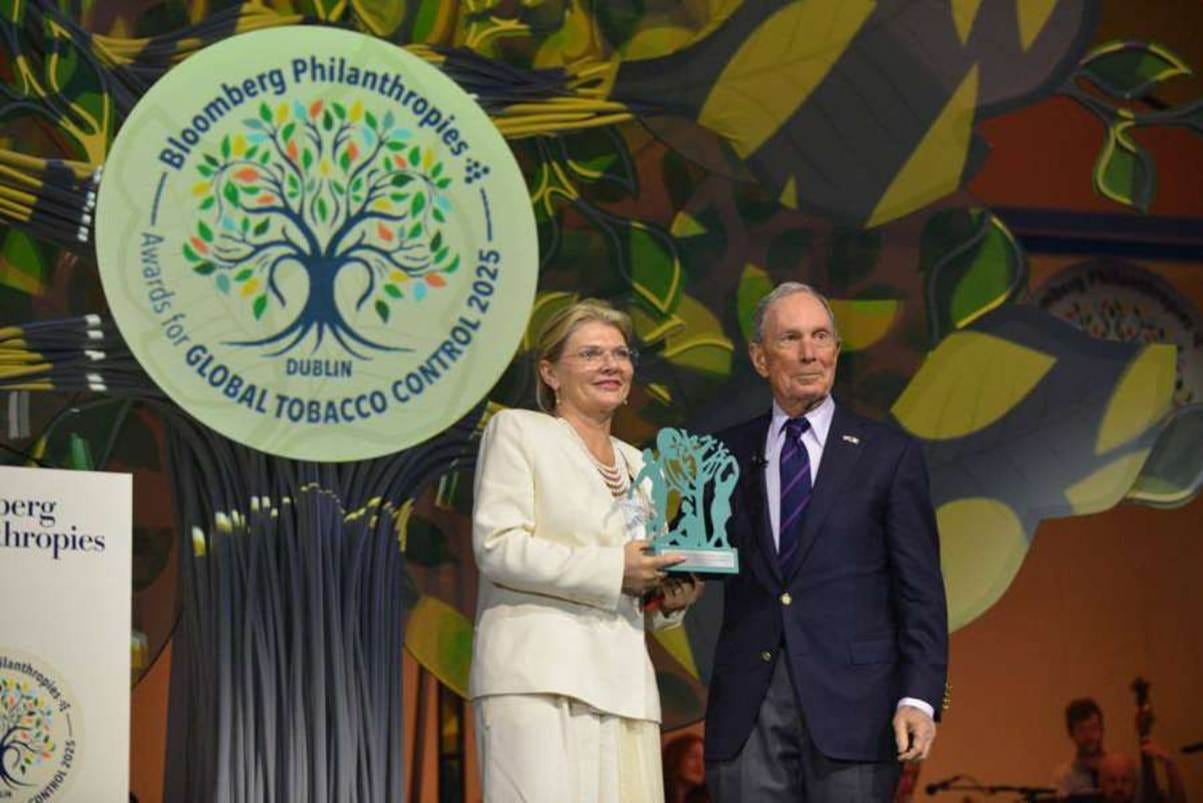
Time was when Michael Bloomberg was a candidate for President of the United States, but now he has found another stage for global attention.
How the WHO became subservient to one billionaire
The Big Change series has shown how the well-funded groups behind the campaigns are more concerned about winning than about advancing human health or improving the environment. The MPOWER debacle shows how one billionaire can pretend he is saving lives in a simple black or white issue while his prohibitionist strategies are actually forcing so many to continue smoking due to his failure to understand the complexities of the issue.
Bloomberg’s flotilla of NGOs is determining global tobacco-harm reduction strategies and policies, against the evidence of scientists, academics and wealthier governments not reliant on the billionaire’s money.
The regulatory reactions against nicotine harm reduction strategies like vaping and nicotine pouches is mainly based on activism run by Bloomberg NGOs in the name of the WHO. It is now creeping into regulations like the EU Tobacco Products Directive which is planning to submit to the WHO by imposing restrictions and higher taxes on e-cigarettes and nicotine pouches.
The WHO is powerless to intervene – they do not control the funds or the policy implementation and can only accept what Michael Bloomberg tells them to say. Their scientists have to systematically reject each study that shows how vaping and nicotine pouches are far less harmful than smoking. They have to turn the microphones off on member states at FCTC COPs when they demonstrate how promoting tobacco harm reduction strategies have significantly helped reduce smoking levels. They have to raise fears on Big Tobacco funding aimed at the youth to deflect from the reality of the exponentially higher Bloomberg funds they are receiving.
The WHO is left powerless and forced to provide Michael Bloomberg with a veil of legitimacy that he uses to promote himself and gain facetime and photo-ops with national leaders when they celebrate MPOWER achievements. For the WHO, the only thing worse than this is for Michael Bloomberg to suddenly get bored with the WHO and stop writing the checks. If that happened, the WHO MPOWER and FCTC websites would be taken down within weeks.
Conclusion: What can be done?
This case study shows a serious abuse of Big Change, but there are measures that can be taken.
The UN needs to clean out the activist cobwebs from its agency programs and remove its dependence on billionaires, foundations and interest groups. The UN needs to downsize and rely on member states for their program initiatives.
UN member states need to define clear guidelines for non-state actors they choose to collaborate with. Rather than celebrating billionaires like Michael Bloomberg, they need to impose limits to their influence. If Elon Musk funded the UN peacekeeping program and started directing blue berets to war theatres of his own liking, would the UN support this? Would they be in a position to stop this?
The US needs to impose stricter tax and transparency regulations on foundations run by billionaire philanthropists, especially when they are operating outside of the US and often against US interests. Bloomberg’s NGO flotilla are not doing humanitarian work in the same way an NGO like GAVI is, but are simply running activist lobbying campaigns and extorting governments in developing countries.
Finally, we need to differentiate between NGOs and other civil society non-profits that do humanitarian work and what I have referred to as APEs (Alternative Policy Enterprises) that manage large lobbying and litigation budgets as fronts for interest groups and billionaire “philanthropists”. Bloomberg’s flotilla are more APEs than NGOs.
Otherwise, the only other alternative is to wait until the billionaire runs out of money or his interest wanes and common sense on tobacco harm reduction can return. Given how Big Change operates to preserve itself, that may be a long wait where far too many people will believe the anti-harm reduction dogma and continue smoking.
Excellent report. Thanks. There is only a missing ingredient: the tobacco control orthodox technocracy outside Bloomberg's flotilla and the WHO window dressing. This technocracy is made of mostly academics: medics, toxicologists, health scientists on tobacco/nicotine issues, employed in public health and regulatory institutions (universities, health centers, hospitals, CDC, FDA and their analogues worldwide). As an analogy: if Bloomberg and its flotilla are the. crusade's armies, the technocracy is the holly priesthood. There is a symbiotic relationship: the technocratic priesthood provides public funded "scientific" legitimacy, to counter the image of Bloomberg's crusade as motivated only by the whims of a billionaire. Conversely, Bloomberg's activism energizes anti-THR research and public policies by making "protection of young people" a priority over saving adult smokers. Bloomberg's cash and lobbying also provides massive public diffusion to the research done by the technocrats, which is basically an effort (whether because of ignorance or cynicism) to over-emphasize and exaggerate harms from non-combustible products. Without the technocracy Bloomberg would risk becoming identified as a wild trigger happy cowboy, without Bloomberg's activism the technocrats (most of whom are not built to be activists) would be much less convincing to decision makers and to the broad public.