


This is the conclusion of a three-part series on the Plastic Fear Complex presenting plastics as the next global environmental health crisis, following the climate change playbook of controlling the narrative and fabricating fear. Part One looked at how media groups are starting to finally wake up to the nonsense published by activist scientists about the faux risks of microplastics. Part Two examined how the Minderoo Foundation has been pumping millions of dollars into funding activist science publications, NGO campaigns, lawsuits and media reporting against plastics. This third part is a film review of The Plastic Detox - the Minderoo Foundation-funded anti-plastics lobbumentary just released on Netflix. It serves as a case in point of how facts don’t matter when emotional, anti-industry campaigns have unlimited funding to control what the public perceives.
Writing a review of the Minderoo Pictures film, The Plastic Detox, was a challenge. Do I assess it on its production and cinematography value? Do I evaluate the 90-minute film on how it treated basic facts and evidence on plastics? Should the motivations, politics and campaigns of the parties involved enter into the review? Should it be evaluated as an example of how millions of dollars in foundation funding is liberally splashed out to support a series of Minderoo-backed political campaigns against plastics? Perhaps it is best to start with the quality of the film, rushed through with less than a month of post-production to meet the Netflix release window.
Poor Quality
Something was off from the very start of this “philanthropic film initiative” when I noticed the names of 23 executive producers in the opening credits interlacing a series of influencers making knowledgeable, panicked claims to intense music about microplastics found in their balls. Maybe their screams of how plastics are causing their penises to shrink, lower their sperm counts and cause an increase in miscarriages was meant to distract me from the listing of the 23 cooks in the kitchen.
But these 23 executive producers each wanted to partake in the Minderoo Foundation’s honeypot and concentrate on their own pet campaigns against plastics, so instead of a clear story, the viewer is forced to try to piece together a mosaic of vignettes of anti-plastic crusaders from high fashion to plastic-free cosmetics and hair gurus to Louisiana factory fighters to California attorney generals - all mixed together (and often returned to) without any coherence. And then there were the nine scientists they had lined up to add a variety of spices to the soup. The director no doubt tried to shove these pre-filmed reels into breaks within his main storyline but the transitions were often too forced and painful for the audience.
This is always the problem with activist campaigners who try to flood an issue with so many special interests and then struggle to keep everyone on the same page (like forcing the No-Nukes and anti-hydroelectric protestors into the climate/renewables campaign). Was this a film about plastics causing infertility, or social justice violations in Cancer Alley or industry lies about recycling capacity? This was a major flaw in the film’s script that only 23 executive producers can claim credit for.
There was only one common thread that this executive production cabal could agree upon: that not a single good thing could be said about the benefits coming from plastics. The bias was breathtaking. Not a word of how plastics prevent food from spoiling or cross contaminating, or how it allows for a reduction in CO2 emissions (compared to steel, glass and wood), or even how plastic devices and PPE keep people safe. If your ambition is to ban plastics, you have to be prepared to lie and look stupid.
The Main Story
The main storyline was how six couples, all trying to have children without success for between two and ten years, could conceive if they just removed most plastics from their homes. The plot was simple: “If we lower their exposure to the chemicals in plastics, can we change their fertility?” This tactic is similar to the story about a decade ago of the cute Swedish family that went organic for two weeks and suddenly became “healthy” (until we found out the Coop supermarket chain was sanctioned and the campaign was banned as a misleading advertisement).
Any couple having tried to have a child without success can understand the emotional strain such a situation can put on a person, a relationship and a community. Personally, my wife and I tried for four years to have a child, without success, so I understand the power of such a storytelling technique. As the couples cried onscreen to somber music, who would not be rooting for them to finally receive the good news of a long-anticipated little one? But is it ethical for such personal tragedies to be mixed with political agenda and activist campaigns?
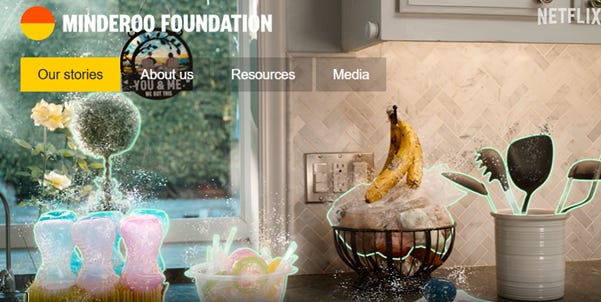
Minderoo Pictures aims to be the impact storytelling arm of the Minderoo Foundation and with a significant investment in campaigns to ban plastics, their objective was to produce a frightening, upsetting and provocative film about the assault of plastics on humanity. Haunting music provided a loud overlay on the images as the camera scanned an average house, showing chemicals suddenly coming to life and off-gassing from our everyday products, emitting fake fumes (microplastics no doubt) into the air while a voiceover was telling you:
“They are often in places you can’t see! … But that’s just the tip of the iceberg” … “and our children are absolutely inundated with the plastics in their toys” …“We ingest them, we absorb them through our skin, we inhale them – every which way that they can get into our bodies, they do. And as they pass through our bodies, they wreak all sorts of havoc.”
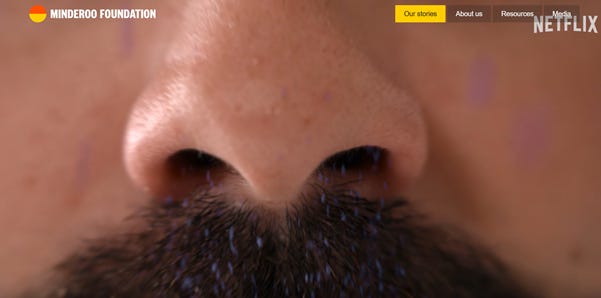
With scary animation and haunting music, the theme of the film was clear: Plastic is the enemy of humanity.
The Star Scientist
The main part of the film starts with a scientist – Shanna Swan – being called to the stage and speaking to an adoring audience on the infertility crisis. The storyline then transitions to Shanna, this kindly 90-year-old grandmotherly figure, appearing on Joe Rogan. This is, of course, credibility sculpting. Shanna starts her speech with the claim that our increase in infertility is closely linked to our exposures to plastics.
The film then moved back to reactions of people when being told men’s penises are getting smaller. If the goal was to lock a message in the heads of the viewers that plastics are linked to smaller kits, then it succeeded within the first five minutes.
Once film viewers were made comfortable with Swan’s authority, with flashbacks to academic papers and TV interviews in the 80s and 90s, she presented her thesis:
“There are a lot of crises in the world right now. I don’t want to scare people, but I want to tell them that this is also an important crisis. This is also something we have to pay attention to, and actually in terms of our survival as a species, it may be (… pause for effect) one of the most important.”
So the plot for the film is: “What do we do to keep the human race alive?”. And the conclusion is simple: Ban plastics.
The Science
Swan admitted that the film’s plastic detox experiment was not “quote-unquote a scientific study”. There was no control group. It involved a very small group from different parts of the US and all of the couples who were infertile had unexplained infertility. The idea is that we should not challenge this famous scientist’s claims or methodology and just let the story unfold with literary license.
Swan’s argument was simple and simplistic: “There was nothing in their lifestyle that was causing the infertility with the exception of chemicals in their environment.” This was a disturbingly unscientific conclusion coming from someone with Swan’s evident credentials. But it is the idea dominating the emerging exposomist movement (replacing three decades of failed endocrine disruption research claims) that every disease that is not genetic or communicable comes from chemical exposures.
There was no reflection on the lifestyle influences affecting infertility. Most of the women trying to conceive were in their mid to late 30s (a time when fertility is naturally declining). Swan admitted she herself had two children in her twenties and then tried for a third before finally succeeding at the age of 42 so this fact must have been on her mind even if she did not share it. Any increase in infertility can also be attributed to the stress of modern life, more sedentary and dominated by screens, with increased anxiety from social media manipulation, shifts in diet and exercise patterns. You would likely get better conception results if you conducted a social media detox.
Three decades of failed hypotheses
But those are factors the endocrine disruption scientific community overlooks when they make claims like: “There was nothing in their lifestyle that was causing the infertility with the exception of chemicals in their environment.” For more then three decades, endocrine disruption activists have rejected other theories to complex issues, criticized scientists who did not follow their paradigm while failing to prove their claims, hiding contradicting evidence and continuing to scare the public with their theories.
After three decades, the endocrine disruption fear campaign became “banalized” (like dioxins and ozone depletion), funding dried up and the scientific world moved on, with these activist scientists turning to concentrate on bigger theories like defining the exposome. The Plastics Fear Complex resurrected these die-hard endocrine disruption activist scientists with funding, microphones and credibility. But the dogmatic intransigence of the scientists speaking in this film are a reminder of why they had been ostracized by the scientific community.
Leonardo Trasande rounded off the following diseases that came from endocrine disrupting chemicals: heart attacks, stroke, autism, ADD, Parkinson’s, dementia, obesity and boldly claimed that these diseases can be passed down five generations. He surprisingly forgot to mention cancer. I was curious about the certainty of his claims. One generation ago, my mother smoked while she was pregnant with me. And Leo now wants me to panic about touching a plastic bag???
Landrigan Again
Part Two of this series showed how Philip Landrigan is bought and paid for by Andrew Forrest and his Minderoo Foundation. Punching his timesheet for this film, Philip tried to explain how a toxic chemical, when it enters a woman’s body, contaminates three generations. He called it “toxic trespass” without any attempt to explain to the audience that all things are made of chemicals and that all chemical substances, even water, at some level, is toxic. When John C Warner, the father of green chemistry said: “Things don’t have to be toxic!”, I was tempted to switch over to stream something on Disney+.
I understand that when Philip Landrigan growls about toxic chemicals, he only means synthetic chemicals … even though natural substances in foods like coffee, humus or soybeans expose us to far greater levels of endocrine disrupting chemicals. Fortunately very few people drink coffee today and vegan mothers don’t feed their babies soy milk.
The Minderoo Foundation’s prized Golden Boy, Philip Landrigan, must have just been itching to go off-script and add that infertility is also caused by pesticides, but he was forced to pass over that in silence. Philip is working for a new paymaster now.
I would need two more articles to go through the ridiculous emotional claims made during the film’s scientist cameos. Without blinking an eye, they continued to advance the now well-debunked myths about microplastic exposures. The point is that the film, Plastic Detox, was not meant to be scientifically correct – it was meant to frighten people.
The Plastic Detox
Between the unrelated anti-industry side-stories and scientists sharing their theories, Shanna Swan takes the six couples through a plastic detox, throwing out most of their household products on Day 1 and replacing the plastics in their homes with “safe” products. Supermarkets were portrayed as a toxic war-zone. After an hour with Shanna in the shop, one of the detox participants looked in horror as a cashier was trying to pass them a receipt, shouting at her as if the BPA-laced paper were the bubonic plague. It was hard not to notice how this participant touted massive body tattoos (but the ink must have been “chemical-free”).
The plastic detox would last for seven weeks with regular measurements of the participants’ BMI, urine and sperm samples to track the success of their detox. After the first tests, the kindly Shanna Swan gave the bad news to each couple of their deathly exposures to dangerous chemicals added to plastics. As the body burden of toxic chemicals with scary names was read out, the reactions were dramatic. When Shanna exclaimed: “Jesse, you have high phthalates!”, the poor man wilted in shame and absolute horror. It must have meant something bad.
After six weeks, when sperm counts were still declining, Shanna reassured them it was not their fault. “Endocrine disruptors are so pervasive, you are being exposed even when you least expect it.” The audience was made to understand how difficult it is to remove all of the contaminants in their lives (especially as evil industry keeps on polluting their environment with the support of a corrupt government). These setbacks so near to the end of the seven week detox had a dramatic cinematographic effect as hopelessness and despair were captured through the lens. Our rooting for these infertile couples was being put to the test.
These declines though were quickly forgotten at the end when Swan triumphantly celebrated week seven’s results, presenting graphs for the entire period, all showing continuous increases in sperm counts for all of the men in the test group as their exposures to plastics were reduced. It was a remarkable success, vindicating thirty years of Shanna’s research. But, but … Week 6 sperm declines? Despair? … OK, never mind, it is just a film…
And the audience, after investing 90 minutes into the preset storyline, wanted to believe that the plastic detox worked. The film ended with three couples celebrating the birth of their children. A happy ending.
This is quite a remarkable jump to assume that brushing your teeth with a bamboo brush and baking soda would make you fertile again, but today’s non-critical society will likely accept this conclusion without question or hesitation and blame plastics and industry for this painful misfortune of infertility.
Most of the couples with non-explained infertility were only trying for two years. That is not a long time for people in their 30s. When my wife and I were trying for four years, we were told by a specialist to be patient (couples waiting to have children until their 30s were less than half as fertile as teenagers). After four years of trying, we had three children naturally in the next three years. This happy ending came with no plastic detox and, like most people, no foundation-funded film crews trying to force a politicized story.
The Politics
Minderoo Pictures was created in 2021 via Australian billionaire and executive chairman of Fortescue Metals Group, Andrew Forrest’s Minderoo Foundation. Referred to as a “philanthropic film initiative” focused on producing high-impact documentaries addressing urgent global environmental and social issues, one of its first projects was to produce this film about plastics. Forrest’s aggressive ambition is clear:
“To have real impact we must motivate people, companies, and governments to act, to reassess their behaviors or start a movement. This is what we hope to achieve through Minderoo Pictures.”
And if this movement bans plastics and helps the metals industries, so be it.
But Forrest’s ethics (or lack thereof) is disturbing. The $7.7 million (A$10 million) Forrest gave to set up Minderoo Pictures was not a philanthropic gift. It was a campaign tool – a weapon – to fulfil the billionaire’s ambition in a battle against the plastics industry. Andrew Forrest makes no secret that he wants to ban plastics to hurt his adversaries so he created the film to advance this.
In the last section of the Plastic Fear Complex series, we saw how Andrew Forrest used his Australian Minderoo Foundation to fund an NGO front group, the Intergenerational Environment Justice Fund, to secretly pay $500,000 to a US law firm to file a lawsuit against Andrew’s arch-enemy, ExxonMobil, for making false claims about their plastics recycling capacity. This law firm then made a series of donations (amounting to $39,000) to the California Attorney General, Rob Bonta. Bonta then simultaneously filed a similar lawsuit, on behalf of the state of California, against Exxon.
Ten minutes of screentime in Andrew Forrest’s Plastic Detox film was dedicated to Rob Bonta and it is clear that this interruption in the natural flow of the film was at Forrest’s behest. It did not fit the main theme about plastics and fertility so we can only assume that this insertion was intended to advance the ongoing lawsuits, prime the juries and advance the California AG’s stature (and his own case against Exxon as well). Most film viewers will not have noticed this Sugar Daddy manipulation.
Bonta’s forlorn voiceover about his daughter not wanting children while the screen captures images of a developing country with piles of plastic trash and burning garbage fires was sickening if you realize that he was only doing this bit as a $39,000 donation payback. The California Attorney General’s claims that big corporations are lying to the public for money, likening the plastic industry to Big Tobacco, rings hollow amidst the stench of Bonta’s own hypocrisy.
The Plastics Detox was not a credible film about the risks people are facing living in the modern world. It was a campaign weapon used by a petty billionaire from the metals industry to fight against the more sustainable use of plastics. We have to understand how big foundations are funding the Plastic Fear Complex and how they can control the narrative by buying off scientists, NGOs, the media and the streaming companies. When billionaires can produce films that advance their interests, pay off Netflix to pretend the product is genuine, and millions of viewers consume the propaganda, then a little bit more of democracy and free thinking dies.