


Watching the AI horror-comedy sequel, M3GAN 2.0, I enjoyed how one of the main villains in the story was a tech “philanthro-capitalist”, played by Jemaine Clement. I thought to myself: “My work is done here.”
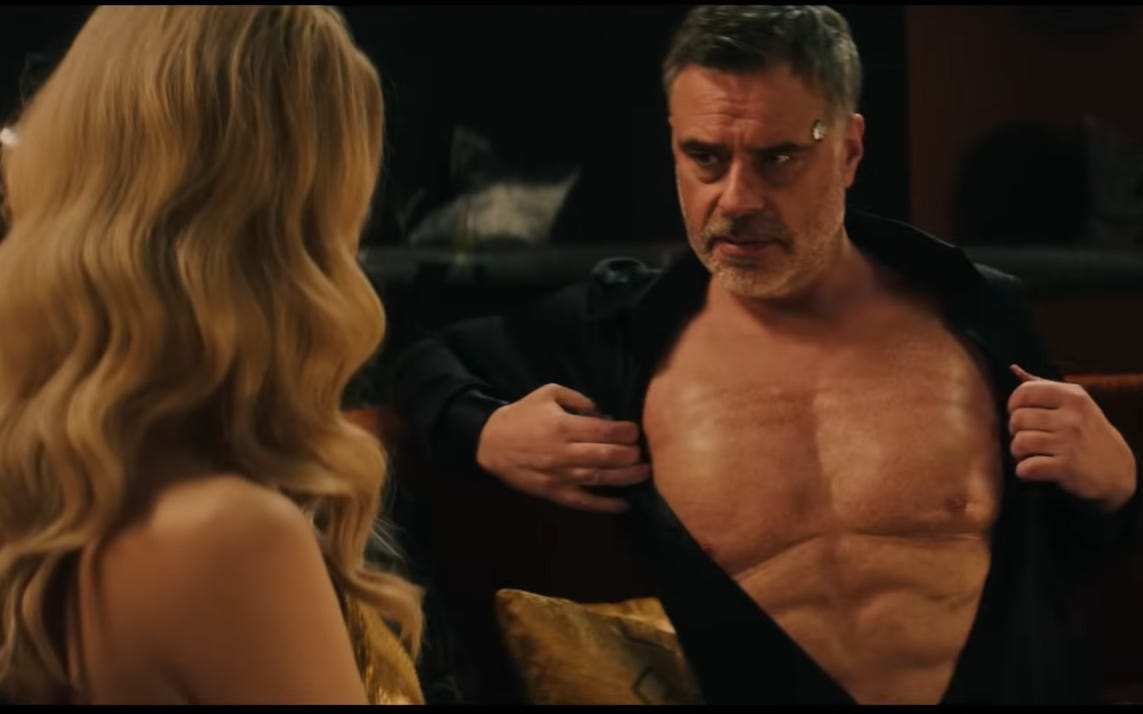
2025 saw the increase in power and influence of foundation activism. Philanthropists are no longer using their billions to make the world a better place by alleviating poverty, lifting up the less advantaged and promoting research solutions, but rather to impose an imbalanced influence on political issues.
The Firebreak has spent a good part of 2025 trying to shine a light on how these foundations, often managed by seasoned activists, have interfered with policy dialogues. Namely:
How Michael Bloomberg spent $1.6 billion to define the WHO Tobacco Control agenda, ensuring that the majority of FCTC civil society voices attending the COP11 were created or funded by his network of organizations.
How foundations funding NGOs campaigning against salmon farming then got media groups they fund to report on their NGOs’ activities.
Not only are millions in donations propping up large media groups (at a price to journalistic integrity), foundations are also founding and financing investigative news organizations like The Examination to feed politicized fear stories into the mainstream media.
Seven foundations (via a fiscal sponsor) have been funding tort law firms like Sher Edling to continue to file pointless climate nuisance lawsuits against fossil fuel companies for the damages from climate change, not to win but to simply create negative publicity and costly legal bills for the industry.
Foundations like Bloomberg Philanthropies have set up phantom NGOs (with no legal status, no transparency on their operations and no accountability) like Beyond Plastics, Beyond Petroleum or the Tobacco Control Research Group.
We are only now learning the extent to how foundations had pumped billions of dollars into hyping up the climate and post-capitalist narratives. The operatives behind these groups were stealth, relentless and had no regard for facts, evidence or fairness.
The professionalization of well-endowed foundations pushing political agendas has added a new, distorting dynamic to policy dialogues - with unlimited funds, control of the media and no demands for transparency. Without significant changes in how foundations are allowed to manipulate the policy process, stakeholder dialogue will become meaningless and one-sided.
What is the Problem with Foundations?
The public perception of philanthropists is one of a benefactor returning billions earned to help promote social causes (funding disadvantaged students, hospitals, the fine arts…). But as the number of billionaires increased dramatically over the last two decades (a consequence of immense wealth creation from the internet, social media, crypto and AI revolutions), there has been a growth in consultancies (professional activists) managing these largely passive foundations.
Fiscal Sponsors
The professionalization of foundations has led to common networks of activists diverting a large source of wealth to their campaigns. One tool the Firebreak has been covering in 2025 is the growth of fiscal sponsors. There are many types of fiscal sponsorships, including:
An organization that coordinates funding and other administrative services for existing NGOs or projects, often accessing its network of foundations. Sometimes the foundations prefer to use such intermediaries if the projects have questionable ethical objectives. See for example the foundations donating tens of millions of dollars via a fiscal sponsor, the New Venture Fund, to a tort law firm, Sher Edling, to file useless climate nuisance lawsuits against the fossil fuel industry.
Fiscal sponsors can also run a project for a foundation pretending to be an NGO but which only exists within the sponsor’s offices. In 2025, The Firebreak revealed that the large NGO, Beyond Plastics is not a legal entity, discloses no financial information and cannot be held accountable for their claims.
Fiscal sponsors can also be regranting organizations. In 2025, the Firebreak translated the excellent investigation by Florence Autret into the stealth world of the European Climate Foundation. With an annual budget of €275 million in its most recent (two page) financial declaration, they have been able to buy off most environmental NGOs in the EU and use them like a flotilla to support their campaigns. There was zero transparency in how they conducted their net-zero strategy. But this secretive group exists, which is more than can be said about the Agroecology Fund, another regranting group that our investigation revealed to have taken in over $100 million from an undisclosed number of foundations to fund campaigns against conventional agriculture. As the Agroecology Fund does not exist in an legal form outside of its fiscal sponsor, the Global Greengrants Fund, we have no idea how they spent these funds.

Transparency is not an issue for these foundations. Because they have a trust surplus (perceived as giving money away rather than trying to capitalize on opportunities), nobody questions their intentions or feels the need to monitor their activities. This allows them to operate in the shadows, hiding or diverting funds that would indicate inappropriate behavior. They donate to large news organizations like the Guardian or the Associated Press and the public does not suspect that the reporting then has to reflect the foundation’s campaigns, projects and special interests.
Dark, Donor-Advised Funds
Special interest groups have been using dark donor-advised funds provided by certain foundations to hide their funding of activist groups and campaigns. A foundation, for example, would accept funding from an organization, anonymize the source, and then turn around and donate it to the campaign the interest group has earmarked it for (minus a management fee, usually around 10%, for the foundation). Take the case study of tort law firms that would donate to an NGO, researcher or filmmaker via a foundation, that cleanses the money before passing it on for a campaign, study or “documentary” that would perform the tasks agreed upon to help the lawyers in their ongoing litigations.
This dark practice should be illegal. Instead, it is tax-deductible and there are some foundations that exist to simply to skim funds off of the grift.

Shining a Light in 2025
In 2025, The Firebreak managed to raise some awareness that projects funded by philanthropists are not necessarily credible or built with virtuous intent. NGOs and academics who were critical of industry funding (usually in the tens of thousands of dollars) have started to realize the hypocrisy of them then receiving tens of millions of dollars from foundations and tort lawyers.
In 2026, we hope to see transparency regulations applied fairly to all groups, including foundations. See my seven recommendations on how to clean up this mess. It is more than ironic that the NGOs created to monitor industry activities, US Right to Know and Corporate Europe Observatory (CEO), are largely funded by non-disclosed interest groups using the dark, donor-advised foundation funding mechanisms. When CEO campaigns against international trade and innovative technologies in the EU and half of their money comes from interest groups via dark American foundations, shouldn’t we have a “right to know” who is pulling their strings?
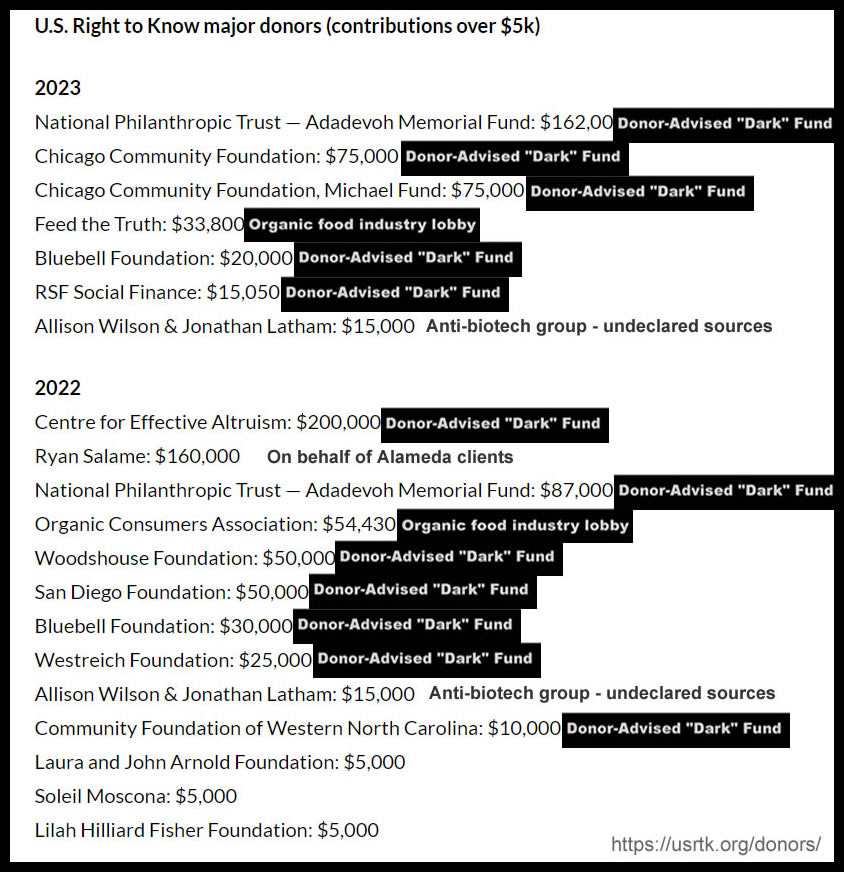
But progress is slow. While one of the most self-righteous activists in Europe, Alberto Alemanno (founder of the modestly named “Good Lobby”), acknowledged that some foundation money may be as tainted as industry funding, he naively thought civil society groups are driven to take this funding as a last resort. (Sure they are … by the hundreds of millions). Given that industry actions are always under the microscope and there are very few who monitor the shadows from where the foundations fund these campaigns, I think Alberto has a few more inner demons he needs to wrestle with.
Professor Alemanno would be the perfect villain in M3GAN Version 3.