


If people isolated themselves in an imaginary world dominated by Big Change …
- where foundations fund scientists to publish dubious studies on nanoplastic detections …
- with media groups surviving on these same philanthropist donations amplifying anti-chemical fear campaigns …
- where Bloomberg-based phantom “projects” are lobbying policymakers to move beyond plastics …
- while well-financed strategic litigation fiscal sponsors are paying law firms to sue plastics manufacturers …
- and billionaires are producing films to raise doubts on the safety of polymer-based products …
it would be possible to believe we are in the process of transitioning toward a post-plastics world.
But in the real world, not funded by billionaire-driven foundations but rather by consumers seeking practical, sustainable solutions, innovative plastic products continue to be developed, improving lives and the environment. Researchers in market-driven sectors are continuously turning to plastics as the more sustainable, innovative alternative to traditional materials like glass, steel, paper and wood.
For other industries, the strategy lesson is clear: If you are under a relentless onslaught of well-funded campaign attacks, the best response is to continue innovating and introducing products that are irreplaceable.
It is time to pause our attention to the activist nonsense and their well-funded anti-plastic transition campaigns, in order to celebrate some of the truly fantastic plastic solutions that are saving lives, improving the environment and positively transforming daily activities. Here are three case studies of how plastics are changing our lives for the better.
Defensive Bullet Drones
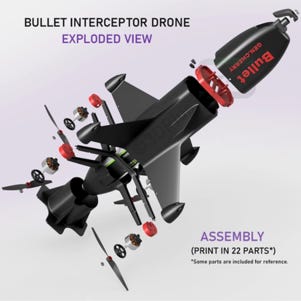
I recently had a conversation with a Ukrainian military expert (I think most Ukrainians are now military experts) about the capacity of the Bullet Interceptor drones. As the Americans foolishly used up almost all of their $4 million Patriot missiles trying to take down $10,000 Iranian drones, the Ukrainians developed the $1000 interceptors to fairly successfully take out Russian Shahed drones at speeds of up to 300km/h. My question to him was why the Russians have not been able to take out the Ukrainian Bullet drone factories.
The expert’s response was simple:
“Because they are produced everywhere. The Bullet drone is mostly made out of plastic with very few parts. Thousands of Ukrainian Babas and Gidos have a number of 3D printers in their living rooms. They get an email with plans for the parts they need to print for the day and, the next morning, these parts are packaged and delivered to assembly points in other living rooms.”
Thousands of these defensive drones are produced every day, saving countless lives by taking out Russian drones and missiles aimed at civilian homes (while Donald Trump is trying to sell the Ukrainian coalition expensive, factory-produced weapons he cannot sufficiently manufacture or afford for his own military).
While this is evidently a “single-use plastic”, each 3D-printed drone has a value far exceeding its cost. Plastics’ versatility never ceases to surprise me.
Polymer Money
With a second home in Manila, I am witnessing the gradual rollout of plastic bills replacing paper money. I can’t help but smile every time I hold a crisp polymer Philippine bill in my hand: smooth, clean, water-resistant and practically indestructible (and it’s also perfect at removing tinga). Australia, Canada and the UK have transitioned to polypropylene-based currencies, the European Central Bank is considering it, while the US, … well, they are still resisting converting their one dollar bill to a coin.

With a wide range of colors and security watermarks, these plastic bills are much more difficult to counterfeit and more secure (and faster) to feed into machines. And unlike between 80-90% of paper bills in circulation, they don’t easily retain cocaine residue (for those living in the EU political quarter of Brussels, this innovation for the euro can’t come soon enough).
The best part is that polymer-based money is far more sustainable than paper bills. According to the International Monetary Fund, plastic currencies last three to five times longer than paper/cotton/linen based bills, costs less to produce and has a “32 percent reduction in global warming potential”. And as money is not commonly thrown out into the environment, collection rates are high so recycling the polymer at its end of service is far more sustainable than incinerating paper currencies.
This sustainability advantage is not surprising. Plastic alternatives have consistently been more sustainable than the alternatives they replaced. See a Firebreak review of a study showing that 15 out of 16 plastic applications were found to release fewer greenhouse gas emissions than the products they replaced. There is good reason why innovative plastic alternatives are introduced (and why these other industries resort to dirty tricks to try to defend their less sustainable products).
When activists tell you that fossil-fuel-based plastics contribute to climate change, just smile and wish them well as they return to their isolated and imaginary Big Change world.
Plastic Food Pouches
Waiting for my first grandchild, I look back three decades to when I had to pack glass containers for a day out with my young children and I marvel at how the world has changed since then. In the 80s and 90s, there were frequent reports of glass shards in Gerber Baby Food containers to terrify young parents, not to mention the weight and the waste of those glass pots. We didn’t know better back then.
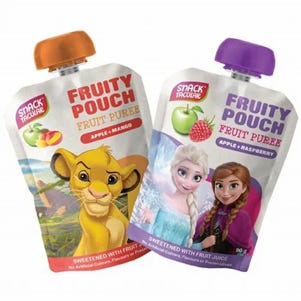
Today, I look at how toddlers can hold these plastic, squeezable food pouches in their hands and feed themselves: the autonomy, the safety, the preservation quality, the attractiveness and the ease of transportation and recycling. Why on earth would any parent want to go back to those dangerous, expensive glass pots from which they would have to spoon-feed their toddlers? This is not just a convenience or additional consumer choice, it is a liberation for tired parents and an early opportunity for autonomy for children.
Despite the pathetic Greenpeace attempts to scare parents with bad research, I know what Gido David is going to pack in his trips to the park with his future grandchildren.
All the Money in the World
Big Change foundations are spending hundreds of millions of (paper) dollars to:
fund retired research mercenaries like Philip Landrigan to propagate scientific doubt,
have film companies produce lobbumentaries like the Plastic Detox,
get law firms to pay off Attorneys General like California’s Rob Bonta
have strategic litigation NGOs serve as front-plaintiffs to sue plastics producers and
continue to finance phantom NGOs like Beyond Plastics,
Meanwhile, the plastics industry is continuing to innovate and introduce products that are becoming indispensable parts of our lives.
It is becoming much harder for environmental activists to go plastic-free. But on the bright side, they are being more ecological each time they choose plastic. It may take time for reason and reality to defeat their hardened fundamentalist dogma … but there will be more than enough time as the industry continues to innovate.
With “all the money in the world” being thrown at this ban plastics campaign, policymakers will still have to think twice about putting any more restrictions on this truly innovative industry. Maybe they will just continue to look away, maybe send another high-level delegation to the next UNEP Intergovernmental Negotiating Committee on Plastic Pollution conference to express their concern, sign some non-binding commitment, and then carry on ensuring that consumers have access to the products and services they need and want.
Next week, I will be delivering the closing keynote at the annual Plastic is Fantastic Day in Vienna. I look forward to using this moment to celebrate the truly fantastic world of plastic innovations.
Let’s declare October 29th the International Day of Plastic!