


It is almost inevitable that money translates to power. But power today is neither military nor institutional but rather, defined by influence. This influence allows certain (wealthy) individuals to control the narrative (and from that, how publics think). Inversely, more influence generates more control and further wealth.
In less than three decades, the Internet, social media, crypto and AI tech revolutions have led to an inconceivable level of wealth creation that is now generating an even more inconceivable amount of power and influence. We are only beginning to understand the extent of the control this has had on our lives.
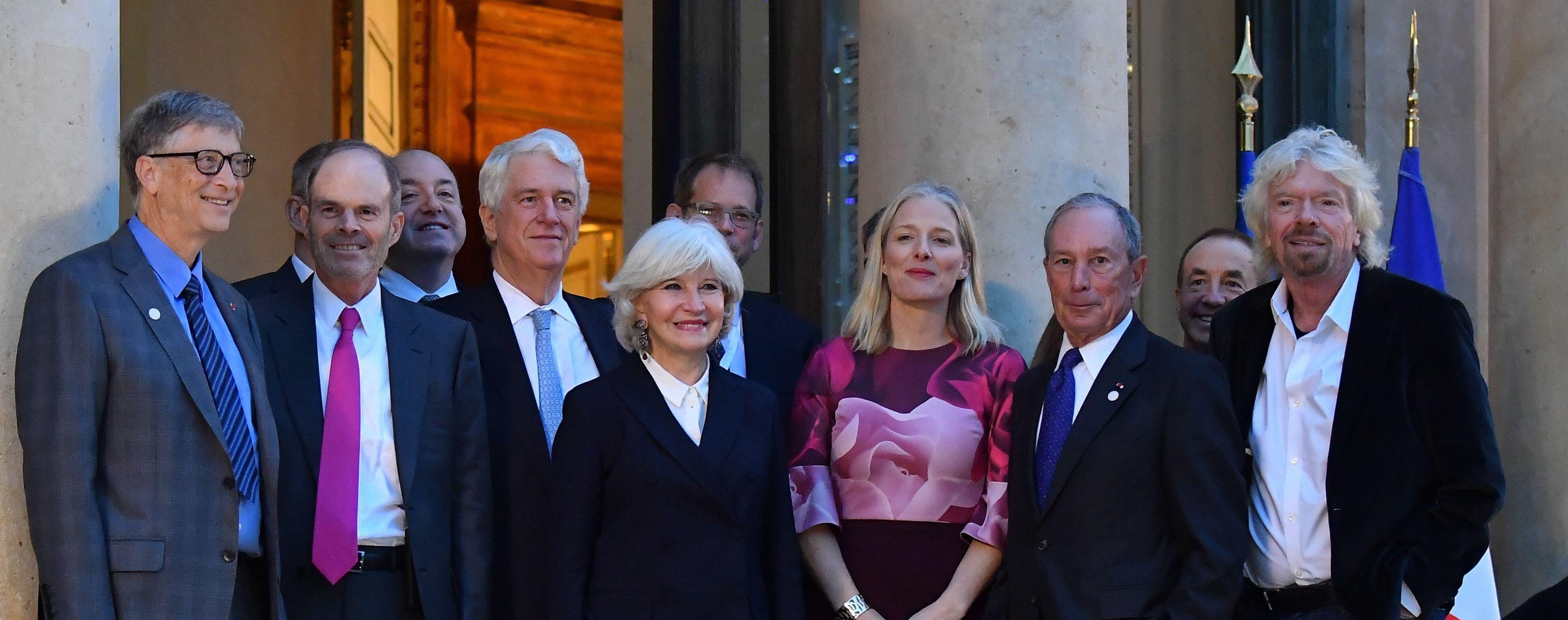
The last 30 years of wealth creation have evolved into a new field of philanthropic financial management where newly minted billionaires are expected (socially strongarmed) to “pledge” a percentage of their wealth into philanthropic endeavors.
As these new billionaires and centimillionaires are too busy managing their companies and the challenges of their rapidly evolving business environments, they have subcontracted the management of their charitable sidelines. Their foundations are often externally managed by professional philanthropy consultants who are charged with getting the most impactful return on investment. Given how certain activists have moved into this new consulting field, the philanthropic objectives are not without political interests.
Introducing Philoligarchs
An oligarchy is a form of government or social system in which power rests with a small, elite group of people. A philoligarchy is a system where power and public perception are controlled by an elite group of wealthy philanthropists. Philanthropists are using their foundations and networks of influence to control the issues and policies. These foundations have become instruments of power as fund managers work together with other philanthropic groups, stakeholders, institutions and leaders to control policy, the economy and global institutions.
Philoligarchical power is embraced by publics who are either benefitting from their donations or buying into the narratives their networks have woven and believing (trusting) their moral tales. Through the veneer of humanitarian virtue, the public easily and uncritically submits to the influence of these organizations, convinced that the narrative these groups have crafted is in their interest.
While these philanthropists stay in the background, they are pulling the strings through a web of organizations having a profound influence on policy, the academe, business groups, the media, the judiciary or civil society. (This differentiates philoligarchies from plutocracies where wealthy individuals fund political operations without the same web of influence.) With no funding timelines, philoligarchs play a long game, slowly controlling the agenda, defining the narrative, the policy campaign, the research strategy and the legal framework.
This is not a conspiracy theory or some incoherent rant against Bill Gates or billionaire privilege. The Firebreak has been unraveling how philoligarchs have been behind the main political issues since these new wealth foundations started setting up shop.
The climate campaign has seen billions in foundation funds pumped into research, policy, media and litigation campaigns against the fossil fuel industry (they were even running the Greta show).
The WHO tobacco control strategy (MPOWER) is controlled by Michael Bloomberg and as he does not feel that tobacco harm reduction strategies (vaping and nicotine pouches) align with his objectives, WHO Member States have had to fall in line.
Salmon, microplastics, pesticides, PFAS… these campaigns are all following the philoligarch playbook of controlling the narrative, effecting change and making an impact.
Philoligarch success is not measured in normal ROI charts.
With present commitments, Michael Bloomberg has pumped over $2 billion into his tobacco control program while smoking rates remain significant. But the large number of groups he has created and fund are controlling the WHO FCTC implementation, his views against tobacco harm reduction strategies has become global policy and the delegimization of tobacco stakeholders has been extended to nicotine advocates.
The Gordon and Betty Moore Foundation has been paying $100s of millions a year into climate campaigns, focusing on climate litigation projects, without having won any lawsuits. But they maintain their influence with strategic litigation groups like Sher Edling, Earthjustice, Earthrights International and a large number of law professors operating small academic institutes.
Power for philoligarchs is about control and influence.
The Good Oligarchs
For decades, activists have been painting a narrative of a cabal of multinational corporate oligarchs running the economy and owning the government. Philanthropists have amplified this prejudice targeting these corporations with a multi-pronged post-capitalist campaign onslaught. While the oil industry has had some temporary respite with a friend in the White House, these corporations are fighting an existential battle from the foundation-funded litigation industry, lost markets from philanthropist-led energy transitions, NGO-led production disruptions and capital and investment restrictions from the Davos-ESG carbon disclosure community.
Tobacconization strategies, more advanced in the EU, involve denying industries the right to participate in the policy dialogue process, delegitimizing corporations, rejecting their research and their right to market products. Tobacco industries have been denormalized, with philoligarch initiatives coming via the WHO to extend this isolation tactic to all “health-harming industries”… which refers to all industries.
But are we just replacing one oligarchical structure with another, less transparent, less accountable and even more ruthless? Philoligarchs now own the country as they rewrite what the economy should focus on. Capitalism, which has allowed these billionaires to acquire their wealth and prestige, has been hijacked by the philoligarchical activist consultants. Their post-capitalist, degrowth ideology is becoming mainstream: “We don’t need innovation or investment, we just need another check.”
The term “oligarch” has a negative connotation, in part because of the influence of the “Russian oligarchy”. They have been commonly linked to how Vladimir Putin has cemented his power by surrounding himself with extremely wealthy Russians who enriched themselves during the chaos following the fall of the Soviet Union. But Putin is (technically) not an oligarch and has had numerous battles with certain oligarchs who didn’t stay in their lanes. So long as they stay out of politics though, oligarch exploitation is tolerated. With so many rats in the kitchen, I cannot imagine what a post-Putin Russia will evolve into.
In the West, the billionaire oligarchs move freely via their foundations to secure power and influence. As “humanitarians” they are welcomed onto the world’s political stages (as a recompense for campaign contributions), given UN ambassador titles (in return for donations to their agency programs), speaking slots in Davos (as part of the World Economic Forum’s partnership structure) and media adulation (worthy of their foundation’s thematic donations). Everyone loves the billionaires who write the checks, so no one questions their legitimacy or their right to get involved in an issue.
How are these philoligarchs controlling the policy process? The Firebreak has shown how they:
are funding university institutes founded by activist academics to produce studies to support their campaigns.
have assembled groups that use or create law firms, funding legal scholars, attorneys general offices and strategic litigation NGOs to litigate against their target industries.
fund media groups, investigative journalist regranting fiscal sponsors and news organizations to amplify their campaigns.
create phantom NGOs via third-party fiscal sponsors to campaign at the grassroots level.
Philoligarchs are not only defining the policy narratives and owning the issues, they are owning the country.
Not Humanitarians
The Carnegie-inspired ideal of philanthropy as a humanitarian calling (to rebalance the scales of injustice from a career of industrialist exploitation) is long gone. A truly charitable endeavor would look for those most in need and use the funds to alleviate the suffering. Billions could be justly distributed in weeks if this were an objective today, but such humanitarianism is rare.
As the public still perceives these billionaire-led foundations as humanitarian, they trust these philoligarchs are doing good, charitable actions and promote their campaigns. Industry funding has destroyed scientists’ careers but academics are jumping through hoops to get foundation support. Foundations undergo very little scrutiny or demand for transparency and accountability. Their representatives are welcomed into the public arena as selfless benefactors, speaking with a moral authority that packages their interests as social goods (that are tax-deductible).
Rebranding them as philoligarchs, using their wealth to exert power and influence to control certain issues, is an attempt to pull back the veil and illustrate how their politics, corruption and illegitimate campaigns need to be more closely scrutinized.
The wealth-power-influence nexus also bypasses an important old adage: “knowledge is power”. Philoligarchs aim to win campaigns, not prove that their positions are right or fact-based. Knowledge is not important and too often campaigns on microplastics, climate or tobacco harm reduction try to hide or dismiss uncomfortable facts in order to win. With unlimited funding, the campaign fund managers can make it rain (or at least block the sun). If philoligarchs play the humanitarian, moral goodness card, while vilifying those experts with evidence, people will want to trust the benefactor (and their foot soldiers, imbibed with virtue in their fight against evil, will find it easier to lie).
Not all foundations are the same and even within some groups, there are divergent strategies. Some tout their social justice programs while their larger campaigns manipulate policies with advocacy and funding.
The Gates Foundation institutionalized the impact-based funding strategy but has remained somewhat faithful to an evidence-based approach.
Groups like Bloomberg, Packard and Moore are more adversarial in their philanthropy, funding lobbying and litigation-driven campaigns against their opponents.
Some foundations like Chan-Zuckerberg Initiative or David Filo’s Skyline Foundation have small philanthropic fronts to mask their investment fund operations (while enjoying tax-free benefits as philanthropies).
Without regulations and no demand for transparency or accountability, these philoligarchs can do whatever they want. Relatively powerless industrial leaders, on the other hand, as the bad oligarchs, are held under the microscope of distrust and have to fight for a place at the table.
The Philoligarch Playbook
One of the main objectives of The Firebreak has been to expose how foundation funding has influenced the media, researchers, NGOs and litigators. It has been an ongoing (open) research project. The Philoligarch series marks an ambitious phase of the research. Over the next month, this series will cover how these networks of foundations are influencing and controlling the policy arena, the media, the research agenda, civil society groups and the litigation industry.
Once their influence on these interest groups has been mapped out, attention will then turn to exposing how the Philoligarch Playbook has been implemented on a cross-section of issues: climate change, tobacco harm reduction, plastics, pesticides, aquaculture, food issues… looking at which groups of foundations are leading which campaigns.
In the recent series that looked at how foundations were funding the climate lawfare strategy around their manufactured field of climate attribution science - from creating law firms to funding strategic litigation NGOs to law school institutions to research groups - it was clear there were at least 20 large foundations involved in this campaign. I was going to do a final article on these 20 foundations when I realized that it needed a more articulated exposé into how they coordinate and choreograph their campaigns to control and influence the climate issue. Given the parallels with how these philoligarchs are dominating other environmental-health issues, it has now become a much larger project.
The next step in this open research project is to articulate the Philoligarch Playbook.
If anyone has valuable information or would like to contribute to this open research, please feel free to contact me.